Mike Evans Injury: Achilles Status and Sunday Outlook
Mike Evans Injury Update: Achilles Status and Sunday Outlook
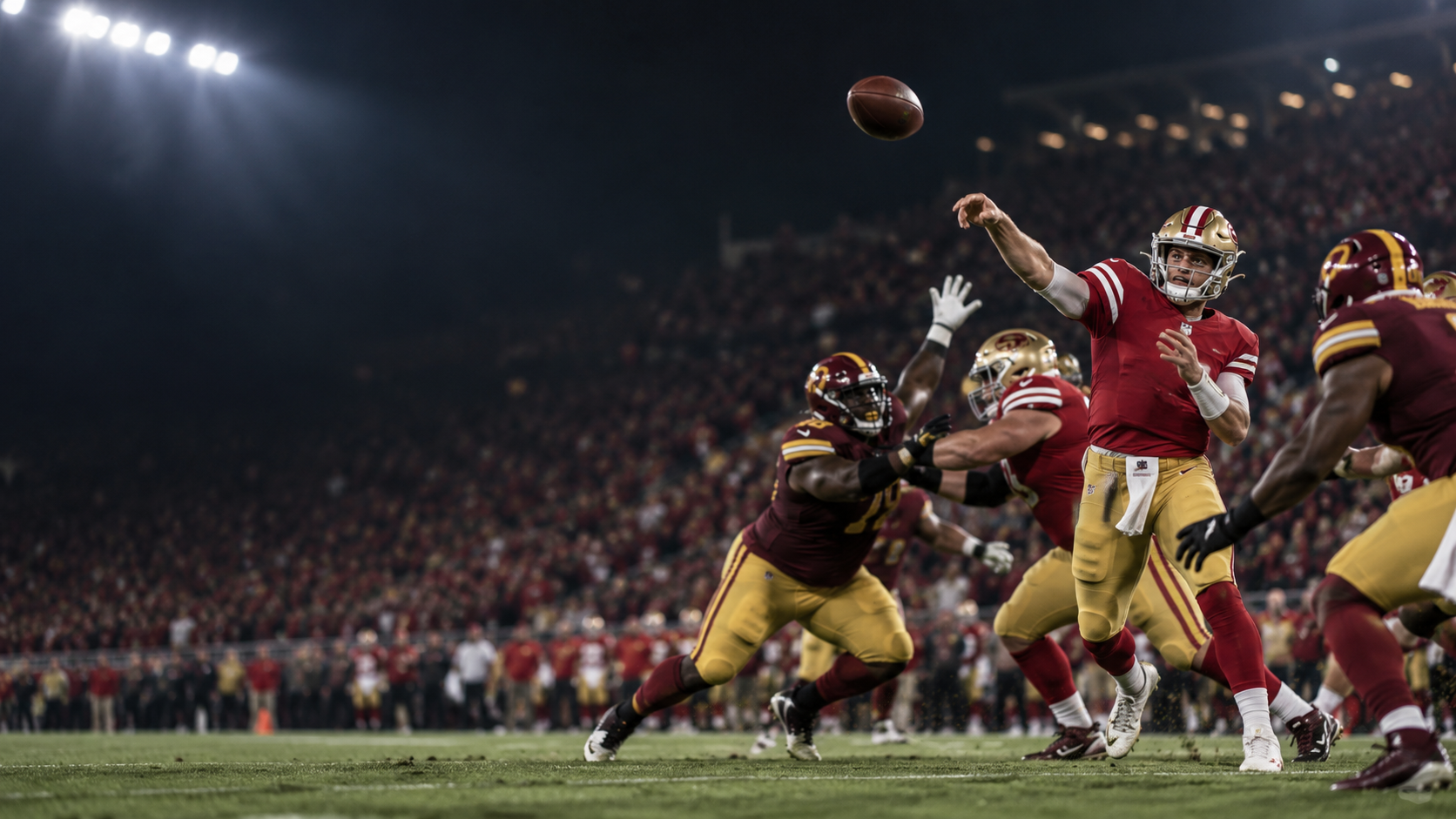
Mike Evans left the San Francisco 49ers’ Monday Night Football game after a reported non-contact injury. Later reports linked the issue to his Achilles, with one describing a flare-up of Achilles tendinitis and another using the broader term “Achilles injury.”
The available reports do not confirm an Achilles tear, rupture, surgery or season-ending injury. Head coach Kyle Shanahan reportedly said the injury is not expected to be long-term and expressed hope that Evans can play Sunday Source 7.
That update is encouraging but does not guarantee Evans will play. His status should depend on practice participation, medical clearance, the official injury report and pregame warmups.
The gap between the two published descriptions is the central uncertainty here. “Achilles tendinitis flare-up” is specific: it points to irritation in a tendon already under load, not to a new structural failure. “Achilles injury” is broader and leaves room for diagnoses the reports have not named. Both descriptions should stay attributed to the outlets that published them, and neither should be upgraded into a confirmed medical diagnosis until the team or a verified medical report supplies one.
What Happened to Mike Evans?
Evans reportedly left the game after a non-contact injury. The initial report did not provide a complete diagnosis or recovery timetable Source 1.
Later coverage connected the injury to Evans’ Achilles. One report described an Achilles tendinitis flare-up Source 9. Another referred more generally to an Achilles injury and discussed Trent Williams’ reaction after the 49ers’ reported Week 6 win Source 3.
The supplied reports contain a discrepancy regarding the game’s description, date and opponent. Those details should be verified against the 49ers’ official schedule before publication of a final update.
Why the Non-Contact Mechanism Matters
A non-contact injury means no opposing player delivered the blow that caused it. Contact injuries usually point toward a discrete event: a hit, a fall, a collision. Non-contact injuries point toward the body’s own loading — a tendon, muscle or joint failing or flaring under force the athlete generated himself.
That distinction shapes expectations. A non-contact Achilles problem is often a load-management question rather than a trauma question, which fits the tendinitis description in the later report. It also explains why the reporting has stayed vague on a timetable: load-related tendon symptoms are graded by how the player responds to progressive work, not by a single incident on film.
Why the Reports May Differ
Two outlets can describe the same injury differently without either being wrong in bad faith. Early reports often rely on the sideline observation — the player pulled up, went down, left the field. Follow-up reports add the diagnosis as it reaches reporters. A tendinitis flare-up and a general Achilles injury are compatible descriptions of the same event, with one more granular than the other.
The practical takeaway: treat the specific description as one outlet’s reporting and the general description as the boundary of what is currently established. Neither resolves the question fantasy managers and fans actually care about — whether Evans lines up Sunday.
What Is Known About the Injury?
Achilles tendinitis involves irritation or inflammation in the tendon connecting the calf muscles to the heel. Symptoms can include pain, stiffness, discomfort while running and reduced push-off strength.
An Achilles tendinitis flare-up is not automatically the same as a tear or rupture. The available reports do not confirm:
- An Achilles tear or rupture
- Surgery or an MRI result
- A specific injury grade
- Injured-reserve placement
- A multiweek or season-ending absence
- A definitive return date
The tendinitis description should remain attributed to the published report rather than treated as a confirmed medical diagnosis.
What the Tendon Does on a Football Field
The Achilles transmits the force the calf generates into the ground. Every acceleration, every cut, every plant-and-drive route depends on it. That is why the symptoms listed in the reporting — pain, stiffness, reduced push-off strength — map directly onto receiver skills rather than onto general movement.
A receiver who cannot push off cleanly loses separation at the top of the route and loses the burst that creates yards after the catch. A receiver who cannot accelerate without stiffness struggles on the deep routes that define Evans’ role. This is the reason a tendinitis flare-up can limit a player even when he is cleared to play, and the reason snap counts and route depth are worth watching as closely as the active/inactive designation.
Why the Absence of a Grade Limits Projection
Tendon injuries are commonly described by grade, and grade drives timeline. The supplied reports contain no grade. Without one, any projection of a return date is inference rather than reporting.
Equally important is what the reporting does not say: no MRI result, no surgical consultation, no injured-reserve move, no stated multiweek absence. Those omissions are not proof the injury is minor. They are proof the public record is incomplete, and the correct posture is to hold the question open rather than fill the gap.
Is Mike Evans Playing Sunday?
Evans’ Sunday status remains uncertain. Shanahan reportedly hopes Evans can play and does not expect a long-term absence, but no supplied report confirms that Evans is active, questionable or out.
The most important checkpoints are:
- Practice participation
- Sprinting, cutting and route-running ability
- Medical clearance
- The official final injury designation
- Pregame warmups and the inactive-player announcement
A full practice would improve confidence in Evans’ availability, while limited or no participation would increase uncertainty. Even if active, Evans could receive a reduced snap count or route workload.
Reading Practice Participation Correctly
Practice reports carry more signal than coachspeak. A player who opens the week limited and progresses to full participation is trending toward playing. A player who opens full and regresses to limited or absent is trending the other way. The direction of travel matters more than any single day.
The type of work matters too. Limited participation that consists of individual drills and route-running is a meaningfully different signal from limited participation that excludes sprinting and cutting. When the reporting specifies what a player did, weight that detail above the label attached to it.
What Shanahan’s Comment Does and Does Not Cover
“Not expected to be long-term” is a statement about the shape of the absence, not about Sunday. A coach can believe a player will miss no significant stretch and still see him sit one game. The comment raises the floor on the outlook — it argues against a season-ending problem — while leaving the week-to-week question entirely open.
That is why the official injury report and pregame evaluation outrank the public comment. The comment describes expectation. The report describes status.
Impact on the 49ers and Fantasy Football
Evans’ availability could affect the 49ers’ passing-game structure, including outside receiver usage, red-zone targets and downfield routes. If he is inactive, other receivers, tight ends and running backs would likely receive additional opportunities.
Fantasy managers should monitor the final injury report and prepare a backup option. An active designation would not necessarily mean Evans is ready for a normal workload, particularly if Achilles symptoms affect acceleration, cutting or push-off strength.
Building a Contingency Plan
The usable lesson is procedural rather than predictive. Set a lineup deadline that accounts for the pregame inactive announcement. Identify a replacement before the weekend rather than after the inactive list drops. If Evans is active but the reporting suggests limited work, treat a reduced projection as the base case rather than the optimistic case.
The risk profile is asymmetric. A player managing push-off symptoms can post a usable stat line on limited routes, or can be pulled early if the tendon responds badly. Planning for both outcomes is more useful than picking one.
Bottom Line
Mike Evans left after a reported non-contact injury during Monday Night Football. Later reports linked the issue to his Achilles and described a possible tendinitis flare-up. The available information does not confirm a tear, rupture or season-ending injury.
Shanahan reportedly does not expect a long-term absence and hopes Evans can play Sunday. Evans is not confirmed out, but his availability and expected workload will depend on practice participation, medical clearance, the final injury report and pregame evaluation.
Frequently Asked Questions
What injury did Mike Evans suffer?
Reports describe a non-contact Achilles-related injury. One report calls it a flare-up of Achilles tendinitis, but the available information does not confirm a tear or rupture.
Is Mike Evans playing Sunday?
His status is not confirmed in the supplied reports. Shanahan reportedly hopes Evans can play and does not expect a long-term absence.
How long will Mike Evans be out?
No definitive recovery timeline has been reported. He could still miss the next game or return with a limited workload.
Did Mike Evans tear his Achilles?
The supplied sources do not confirm an Achilles tear or rupture. The final diagnosis should come from the 49ers or a verified medical report.
How does the injury affect fantasy football?
Managers should monitor Evans’ practice participation and final injury designation. Even if active, he could have a limited role, so a backup option is advisable.
What does non-contact mean?
No opposing player caused the injury. The force came from the player’s own movement, which typically points to a tendon, muscle or joint problem rather than a direct hit.
Should Evans be started if he is active?
Active status confirms availability, not workload. Achilles symptoms can reduce acceleration and cutting even at full clearance, so a reduced projection is reasonable until the reporting shows otherwise.