Northern Lights May Be Visible Across the U.S. This Weekend
Northern Lights May Be Visible Across the U.S. This Weekend: Where and When to Look
The northern lights may be visible across parts of the United States this weekend, giving skywatchers a chance to see the aurora borealis without traveling to the Arctic. Elevated geomagnetic activity could push the aurora farther south than usual, with possible visibility across as many as 22 states.
The forecast remains conditional. A regional alert does not guarantee that every location will see the lights. Visibility depends on solar activity, latitude, darkness, cloud cover, light pollution, and the direction of the horizon.
Why the Northern Lights Could Be Visible
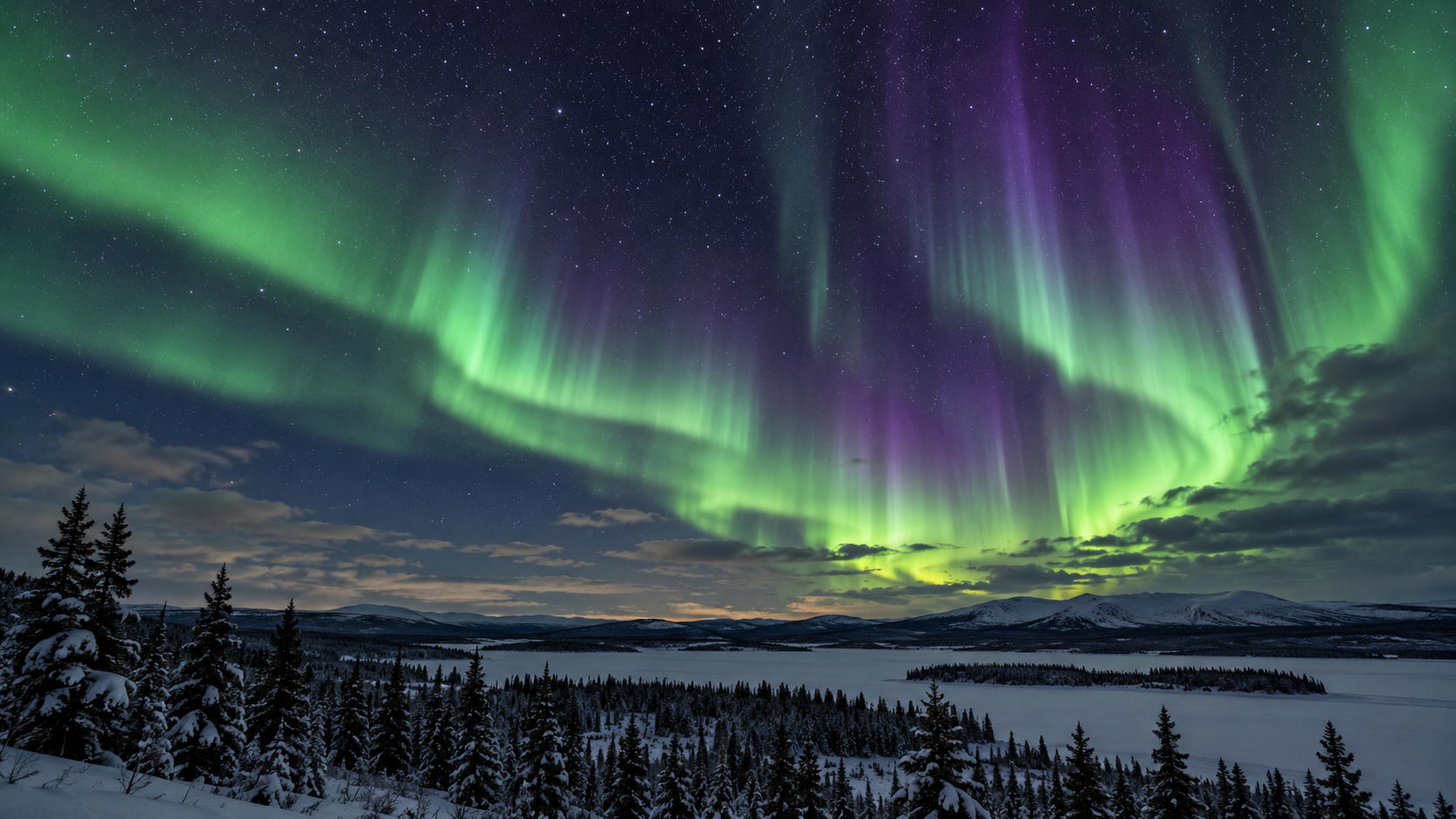
The northern lights occur when charged particles from the Sun interact with Earth’s magnetic field. The particles collide with gases in the upper atmosphere, producing light. Oxygen commonly creates green and red auroras, while nitrogen can contribute blue and purple colors.
During increased solar activity, eruptions from the Sun can send stronger bursts of solar wind toward Earth. These events may disturb the planet’s magnetic field and expand the auroral oval toward lower latitudes.
An ABC News report published October 8, 2026, cited multiple solar eruptions as a possible trigger for auroras across the northern United States Source 9. Check the latest official geomagnetic forecast before planning a trip.
A higher planetary K-index, or Kp index, generally increases the chance that auroras will be visible farther from the poles. However, a geomagnetic forecast measures conditions across Earth and cannot guarantee visibility from a specific town.
Which U.S. States Have the Best Chance?
The highest-probability viewing areas are generally near the Canadian border. Depending on the strength and position of the geomagnetic activity, possible viewing zones may include:
- The Pacific Northwest.
- Northern Rocky Mountain states.
- The Upper Midwest.
- The Great Lakes region.
- New England.
- Other areas along the northern tier.
NewsNation reported that the aurora could be visible across 22 U.S. states this weekend Source 7. This describes potential viewing areas, not guaranteed visibility throughout every state.
A stronger storm may make the aurora visible farther south as a faint glow near the northern horizon. Statewide forecasts can be misleading because towns in the same state may have different cloud cover, light pollution, elevation, and horizon conditions.
When to Look
The aurora can appear at any time after dark. Begin checking the sky once it is fully dark and continue monitoring conditions if the forecast remains favorable. The hours around local midnight often provide good opportunities, but displays can occur earlier in the evening or before dawn.
Auroral activity can be intermittent. It may appear for a few minutes, fade, and return later. Check these sources during the evening:
- NOAA’s Space Weather Prediction Center.
- Local hourly cloud-cover forecasts.
- Official aurora maps and geomagnetic alerts.
- Reports from nearby astronomy groups and verified observers.
Solar-wind conditions can change quickly, and forecasts may be updated as new data arrives.
Best Places to Watch
Choose a dark location away from downtown areas, stadiums, shopping centers, industrial lighting, and heavily illuminated highways. Suitable locations may include legal parking areas near rural roads, open fields, lakeshores, permitted park areas, and designated dark-sky sites.
Find an unobstructed view of the northern horizon. Trees, buildings, hills, and ridgelines can block faint auroras, especially for viewers near the southern edge of the viewing zone.
Check weather and road conditions before driving. Hourly cloud cover, fog, precipitation, visibility, wind, traffic, and local advisories all matter. Do not trespass or park in unsafe areas.
How to Improve Your Chances
Allow your eyes 20 to 30 minutes to adjust to darkness. Reduce phone brightness and use a dim red light when necessary. Faint auroras may initially appear gray, pale, or nearly colorless.
Smartphones and cameras can capture stronger colors than the human eye, particularly during faint displays. Use night mode, a tripod or stable surface, a timer, and manual exposure when available. Long exposures and image processing may make the aurora look brighter than it appeared in person.
Dress for extended outdoor viewing. Wear warm layers, gloves, a hat, and insulated footwear. Bring water, a charged phone, and emergency supplies when visiting a remote area. Tell someone where you are going.
Park legally, stay off road shoulders, avoid private property, and do not check your phone while driving. Use flashlights carefully so you do not disrupt other viewers.
What the Aurora May Look Like
Green is the most common aurora color, but red, pink, purple, and blue may appear during stronger or higher-altitude activity. The display may look like a pale band, hazy patch, vertical rays, moving curtain, or soft glow near the northern horizon.
Clouds reflecting city light, aircraft, satellites, searchlights, and light pillars can be mistaken for auroras. Compare unusual sights with official forecasts and reports from nearby observers.
Weather, Moonlight, and Light Pollution
Clouds can block even a strong aurora. A location with weaker activity and clear skies may offer a better view than a site under a stronger alert but complete cloud cover.
Bright moonlight can reduce contrast, especially near the horizon. Urban light pollution can overwhelm faint auroral light, so moving a short distance from concentrated lighting may improve visibility.
What Recent Reports Say
USA Today reported that the northern lights may be visible across parts of the United States this weekend Source 1. Travel + Leisure also described potential visibility across several states and offered general guidance on when and where to look Source 3.
The Burlington Free Press separately reported on an aurora alert and possible viewing areas Source 5.
These reports support the possibility of aurora activity but do not replace current official space-weather and local weather forecasts.
Frequently Asked Questions
Can the northern lights be seen across the U.S. this weekend?
They may be visible across parts of the country if geomagnetic activity reaches forecast levels. Visibility will vary with latitude, darkness, cloud cover, and light pollution.
What time is best?
Look after dark, particularly around local midnight, but continue checking throughout the night because activity can occur earlier or later.
Can the aurora be seen from a city?
Possibly, but city lights can hide faint activity. Brighter displays may remain visible from suburban areas, while weaker displays require darker skies.
Do I need a camera?
No. A camera can reveal colors and detail that are difficult to see with the naked eye, but direct viewing remains possible.
Conclusion
Parts of the United States may have an opportunity to see the northern lights this weekend. Northern states generally have the strongest prospects, while stronger geomagnetic activity could push visibility farther south.
Check official space-weather updates shortly before going outside, then compare them with local cloud cover, road conditions, and light pollution. Choose a dark, safe location with a clear northern horizon, dress warmly, protect your night vision, and allow time for the aurora to appear.
Artikel Terkait
-
 Francis Halzen and the Search for Cosmic Neutrinos
-
 Why Deep-Sea Rocks Caught Fire in a Laboratory
-
 165-Million-Year-Old Fossil Reveals Broad Swimming Tail
-
 Northern Lights Possible Tonight as Storm Strengthens
-
 IceCube and the Truth About Neutrino “Ghost Particles”
-
 Ancient Radio Burst May Set Distance Record