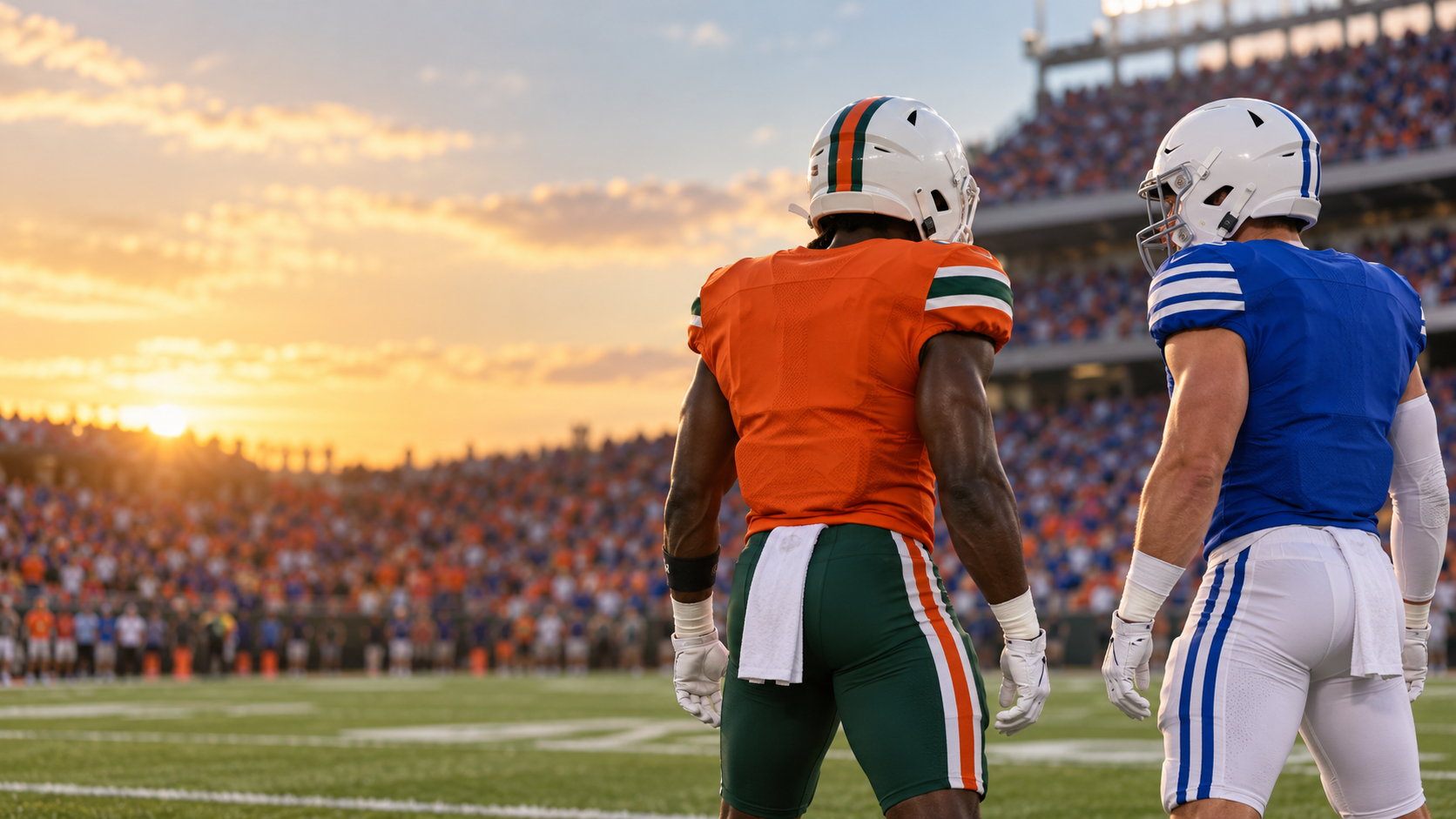
Josh Allen’s Magic Powers Bills Past the Raiders
Josh Allen’s Magic Powers Bills Past the Raiders
The Buffalo Bills defeated the Las Vegas Raiders because Josh Allen produced the plays that ordinary offensive structure could not guarantee. When the pocket became uncomfortable, the initial read disappeared, or a drive needed a spark, Allen created another answer.
That ability remains Buffalo’s greatest competitive advantage. It is also the clearest question surrounding the team.
Allen can extend plays, attack downfield, run for difficult yards, and convert situations that appear lost. Against Las Vegas, those skills helped the Bills secure a victory that depended heavily on their quarterback’s individual brilliance. The New York Times described the performance as another example of Buffalo leaning on Allen’s playmaking to overcome the Raiders. Source 1
The victory matters, but so does the way Buffalo earned it. The Bills showed they could win when the offense was not operating entirely on schedule. They also showed how narrow the margin can become when Allen must repeatedly rescue possessions.
Allen Turned Broken Plays Into Buffalo Opportunities
Allen’s value extends beyond traditional quarterback production. His influence becomes most visible after the original design stops working.
A quarterback can execute the called play correctly and still fail to produce a first down. Allen can turn that same situation into a conversion by moving within the pocket, escaping pressure, finding a receiver late, or running into open space. Those moments create offense where the defense believes it has already won.
Las Vegas had to defend the first phase of each play while accounting for another phase created by Allen’s mobility. His improvisation can produce:
- A pass that develops after the defense initially wins.
- A scramble that converts a difficult down.
- A throw from an unconventional platform.
- A broken-play completion after coverage holds longer than expected.
- A drive extension when the offense appears close to stalling.
These plays do not replace clean offensive execution. They solve problems that clean execution did not solve. Allen’s rare physical ability gives Buffalo a margin that many teams lack.
Allen’s Aggressiveness Creates Reward and Risk
Allen plays with an aggressive temperament. He is willing to attempt difficult throws, challenge tight windows, and hold the ball longer while searching for a play. That approach gives Buffalo answers against pressure and prevents one negative snap from automatically ending a possession.
The rewards are clear. Allen can create explosive offense without requiring every receiver to gain immediate separation. He can move the launch point, force coverage defenders to account for a scramble, and recover from poor field position or a disrupted play call.
The risks are equally important. Aggressive decisions can lead to turnovers. Extended plays expose Allen to hits that a quarterback might avoid by throwing the ball away. The offense can also become too dependent on his ability to produce an exceptional result from an ordinary situation.
That tension defines the Bills. Allen’s creativity is not a flaw Buffalo should remove; it is a weapon the team must manage. The objective is to preserve his aggressiveness for moments when it creates a meaningful advantage rather than requiring it on nearly every possession.
Against the Raiders, that approach delivered enough value to determine the result. The broader question is whether the same formula can withstand stronger pass rushes, tighter playoff coverage, and games in which every possession carries greater weight.
Why Buffalo Needed Every Bit of Allen’s Playmaking
There is a difference between a comfortable team victory and one secured through quarterback brilliance. Based on the available reporting, Buffalo’s win over Las Vegas belongs in the second category.
The Bills did not simply rely on a dominant rushing attack, easy pocket completions, or repeated explosive plays from the supporting cast. Allen had to create alternatives when the structure of a possession did not produce enough.
That is a familiar advantage for teams with elite quarterbacks. A great quarterback can compensate for an imperfect afternoon by covering for a stalled drive, a missed opportunity, or a defense that changes the picture after the snap.
Compensation has a cost, however. If Allen must supply the solution on every difficult down, Buffalo becomes easier to understand even if it remains difficult to stop. Opponents can focus more resources on disrupting him and force the Bills’ other offensive players to win consistently.
The Raiders could not keep Allen from changing the game. Buffalo still needs to build an offense that does not require him to change it quite so often.
The Supporting Cast Must Reduce Allen’s Workload
The Bills need more dependable contributions around their quarterback. That does not require one dramatic change. It requires consistent improvement across ordinary downs.
Efficient early-down offense can keep Buffalo out of predictable passing situations. Reliable protection can give Allen more time without requiring him to extend every play. Receiver separation can create easier completions before he has to improvise. A stable rushing attack can force defenses to respect more than Allen’s arm and legs.
Red-zone execution matters as well. When the field becomes compressed, the offense needs answers that do not depend exclusively on Allen making a difficult throw or escaping pressure. Better spacing, sharper route timing, and stronger play sequencing can reduce the need for individual rescue plays.
Complementary football would not diminish Allen. It would make him more effective. A quarterback is most dangerous when the defense cannot determine whether the next important play will come from a designed concept, a running back, a receiver, or an improvised Allen creation.
The Raiders Could Not Keep Allen Contained
Allen creates a difficult defensive assignment because his physical skills reinforce one another. His arm strength makes deep coverage necessary. His mobility forces defenders to maintain discipline after the pocket moves. His rushing ability creates a threat on passing downs, while his willingness to extend plays means coverage must hold longer than expected.
The Raiders were not defending only Buffalo’s playbook. They were defending the range of outcomes Allen could produce after the playbook had been disrupted.
Applying pressure and finishing pressure are different tasks against Allen. A rush can arrive on time and still fail if he moves away from the first wave. A defender can win his matchup and still lose the play if Allen breaks contain. Coverage can remain sound for several seconds and then fail when he releases a late throw or escapes into open space.
To limit him, Las Vegas needed disciplined rush lanes, reliable coverage communication, and awareness of down-and-distance situations. Pressure remains necessary, but pressure without containment can create the conditions Allen prefers.
Allen’s individual ability also affects the entire defensive structure. When a defense dedicates extra attention to the quarterback, other offensive players can benefit. A spy or additional contain responsibility can reduce the number of defenders available elsewhere, while coverage players must maintain leverage longer.
His plays are individual, but their consequences are collective. Allen can make a defense alter its priorities before he completes a pass or gains a rushing yard.
What the Victory Says About Buffalo’s Identity
Allen is the foundation of Buffalo’s offensive identity. That fact raises the team’s ceiling and exposes its weaknesses.
Elite quarterback play allows the Bills to win games that do not develop cleanly. Allen can make a throw few quarterbacks attempt, escape a situation most quarterbacks accept as a sack, and convert a down that appears unfavorable.
The complication is that heavy dependence can conceal roster problems until an opponent is strong enough to exploit them. When Allen solves every major issue, the Bills can appear more complete than they are. When an opponent limits his improvisation, Buffalo must show that its supporting structure can carry part of the burden.
The win over Las Vegas was encouraging because the Bills demonstrated resilience. It was informative because it also revealed how much of that resilience flowed through Allen.
NFL games rarely follow the ideal script. Drives stall, defensive looks change, and one mistake can disrupt an entire quarter. Buffalo’s ability to respond matters because Allen gives the offense a way to recover.
That resilience still depends on the rest of the team. The offensive line must provide stability, receivers must finish routes, the defense must preserve opportunities, and coaches must adjust when an opponent removes the first option. Allen remains the central stabilizing force, but the team must not confuse his ability to recover with a complete offensive formula.
Buffalo’s Next Challenge: Reduce the Heroics
Buffalo should prioritize manageable third downs, stronger protection on long-developing plays, consistent early-down production, and greater reliability in the red zone.
These improvements would increase offensive efficiency and reduce unnecessary exposure for Allen. The goal is not to remove difficult plays. It is to reduce the number of difficult plays the team must survive.
Opponents will attempt to limit Allen with spy defenders, compressed pockets, short coverage, and pressure designed to take away the first read. Buffalo needs multiple answers, including quick-game throws, designed quarterback movement, screen passes, play-action, and run-pass options. These are tactical possibilities rather than confirmed elements of the Bills’ plan, but the principle is clear: Buffalo must make defenses pay for focusing on Allen.
Protecting Allen does not mean making him conservative. It means using designed movement, sound protection, and efficient reads so his creativity remains selective. The best version of Buffalo combines structure with freedom: Allen operates within a clear plan, then uses his talent when the defense removes that plan.
What the Raiders’ Loss Reveals
Containing Allen requires more than a strong pass rush. A successful defensive plan must combine rush discipline, coverage integrity, outside containment, and awareness of down-and-distance situations.
Any breakdown can become an explosive opportunity. A defender who abandons contain may create a running lane. A coverage lapse may become a late completion. A missed tackle can extend a possession.
The available source confirms the Bills’ victory and Allen’s standout role but does not provide enough verified detail to identify particular defensive errors. Source 1 A proper evaluation requires the complete game film and official box score.
Las Vegas should review whether it generated enough pressure, maintained coverage when Allen extended plays, contained him outside the pocket, and received enough offensive support to keep the defense in manageable situations. The final result alone cannot determine whether Buffalo won because of unavoidable elite quarterback play, preventable defensive mistakes, or both.
Final Takeaway
Josh Allen was the decisive factor in the Bills’ victory over the Raiders. His creativity gave Buffalo solutions when standard offensive structure did not provide enough. He extended plays, stressed the defense, and delivered the individual production that changed the game’s terms.
That is Buffalo’s greatest strength and its clearest warning. The Bills cannot expect Allen to rescue every game. Sustained success requires better protection, more consistent rushing and receiving contributions, efficient early-down execution, and defensive reliability.
Those elements would not replace Allen’s magic. They would allow Buffalo to use it at the most important moments.
Allen supplied the magic. The Bills now need to build a formula that requires less of it.
FAQ
How did Josh Allen help the Bills defeat the Raiders?
Allen provided the game-changing plays Buffalo needed through his arm, mobility, and improvisational ability. He created offense when standard plays did not produce enough. The available report confirms Buffalo’s reliance on his performance but does not provide a complete statistical breakdown. Source 1
Did the Bills win because of Josh Allen alone?
Allen was the central reason Buffalo prevailed, but a team victory still requires contributions from the offense, defense, and special teams. The larger concern is that Buffalo needed an unusually large share of Allen’s playmaking to secure the result.
What made Josh Allen difficult for the Raiders to defend?
Allen combines passing ability with mobility and the capacity to extend plays. Defenders must manage the original play design and what he can create after leaving the pocket. That makes disciplined rush lanes, sound coverage, and reliable tackling especially important.
What should the Bills improve after the win?
Buffalo should seek stronger protection, efficient early-down execution, dependable rushing production, and reliable receiving options. Those improvements would reduce Allen’s workload while preserving his ability to make high-impact plays.
What does the victory mean for the Bills’ season?
The win demonstrates that Buffalo can overcome difficult stretches because Allen can change a game. It also highlights a potential weakness: sustained success will require the Bills to complement his brilliance with a more reliable team-wide formula.
Where can readers find verified game statistics?
Readers should consult the complete Bills–Raiders box score and the official league gamebook for the final score, passing totals, rushing totals, turnovers, and drive-by-drive details. The supplied material confirms the result and Allen’s importance but does not include those figures.