How France’s Riots Benefit the Far Right
How France’s Riots Benefit the Far Right
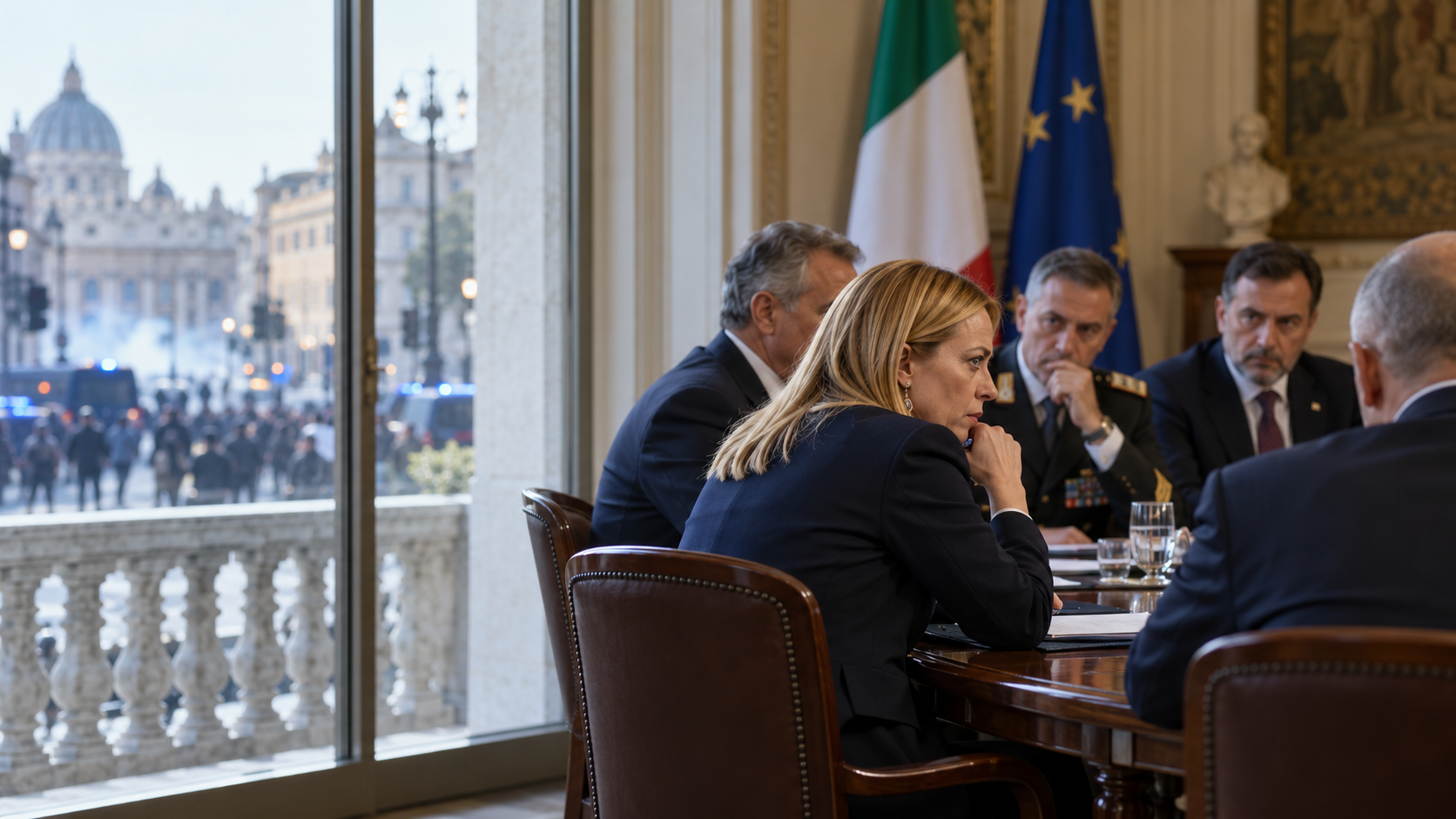
France’s recent unrest has become more than a public-order crisis. Rioting during nationwide protests has created a political opening for the far right, allowing it to present itself as the force most willing to defend authority, security, and national cohesion.
The immediate debate concerns violence, property destruction, public safety, and the government’s ability to restore order. The deeper argument concerns the French Republic itself: whether state institutions can protect citizens, whether mainstream parties can respond effectively, and whether political leaders have lost control of the national conversation.
President Emmanuel Macron said the rioters had “sought to bring down the Republic.” The prime minister condemned those responsible as “thieves” and “thugs,” called for partial curfews, and blamed the “ultra-left” for exploiting the protests. French officials also acknowledged a “failure” in the response, according to The New York Times.
These developments have handed the far right a powerful narrative. Its leaders can argue that established parties have failed to maintain order and that France needs a harder political line. The unrest does not guarantee a far-right electoral victory, but it can move security, authority, identity, and institutional distrust toward the center of French politics.
What Happened During the Rioting?
The unrest unfolded amid nationwide protests but was accompanied by rioting and disorder. Reports distinguished between people participating in protests and those involved in violence, theft, or property destruction. The PBS summary described rioting that marred the protests and recorded Macron’s response to the crisis. Source 7
That distinction matters politically. Peaceful protesters may view the unrest as part of a wider expression of anger or grievance. The government must respond to criminal acts while preserving the right to lawful protest. Far-right forces can exploit the gap between those realities by presenting the entire crisis as evidence of a collapse in authority.
The scale and visibility of the disorder generated national concern. Images of violence, theft, and destruction can shape public opinion faster than detailed policy arguments. They turn an event into a symbol: insecurity for some voters, state repression for others, and institutional failure for the far right.
French officials acknowledged a “failure” in the response, according to The New York Times. The supplied reporting does not identify which officials made that admission or specify the failure’s exact nature. Source 1
Acknowledging failure may be necessary for credibility, but it also creates political vulnerability. It can reinforce perceptions of weak government, strengthen demands for tougher security policies, and give opposition parties evidence that the governing establishment has lost control.
Macron’s Response: Defending the Republic
Macron condemned people who had “sought to bring down the Republic,” according to the PBS report summarized in the supplied sources. Source 7
The language elevates the crisis beyond ordinary lawbreaking. Macron framed the unrest as a challenge to France’s democratic and constitutional order, positioning the government as the defender of republican institutions.
Republican language seeks to unite citizens around the state, common institutions, and constitutional principles rather than partisan identity. However, institutional language may not satisfy voters demanding immediate safety. Macron must address both those seeking order and those concerned about civil liberties and social cohesion.
The distinction between peaceful demonstrators and violent offenders is essential, as is the distinction between political criticism and incitement. Without those distinctions, the government may appear to treat opposition as criminality. With them, it may be accused by security-focused voters of weakness.
Partial Curfews and Political Blame
The prime minister condemned those responsible for the riots as “thieves” and “thugs,” according to the BBC. Source 3
The wording separates violent actors from legitimate political protesters. It reassures citizens that the government recognizes the difference between public expression and criminal conduct while demonstrating authority through a security-focused response.
The prime minister also called for partial curfews. The Guardian reported that the government sought authorization for the measures. Source 9
A partial curfew is a visible assertion of state control. It may reassure residents seeking immediate protection, but it also raises questions about proportionality, civil liberties, and the boundary between emergency policing and permanent restrictions. The supplied reporting does not establish the legal mechanism, geographic scope, duration, or enforcement details of the proposed curfews.
The prime minister also accused the “ultra-left” of exploiting the protests, according to The Guardian. This is a government characterization, not an independently established explanation in the supplied summary. Source 9
This accusation broadens the conflict from rioters to political groups alleged to be exploiting the unrest. Such blame can deepen polarization and make compromise more difficult. It also benefits the far right by reinforcing the perception that mainstream parties are locked in mutual recrimination.
Why the Far Right Is Benefiting
The New York Times reported that France’s far right is capitalizing politically on riots that have shocked the country. Source 5
Far-right movements gain attention when voters perceive a loss of control, weak enforcement, institutional failure, or threats to national identity. The riots place those themes at the center of public discussion.
The far right does not need to prove that it has a complete solution. It needs to persuade voters that existing leaders have failed and that stronger authority is necessary. The government’s difficult position strengthens that argument. If officials impose tough measures, far-right parties may say the response came too late. If officials emphasize restraint and civil liberties, they may be accused of weakness. If the government acknowledges failure, opponents gain evidence for their anti-establishment message.
Public disorder can also shift debate toward immigration, integration, belonging, and national identity. That shift does not establish that immigration or any specific demographic factor caused the riots. It shows how political actors may interpret the events. The description of what happened must remain separate from competing explanations and proposed policies.
The Government’s Balancing Act
The government must respond firmly to violence while protecting lawful protest and civil liberties. That requires clear distinctions between peaceful demonstrators and violent offenders, political criticism and incitement, and emergency policing and permanent restrictions.
A forceful response can restore confidence if citizens view it as lawful, targeted, and accountable. A vague or excessive response can deepen mistrust and strengthen claims that the government either lacks control or abuses it.
Acknowledging failure may be necessary for credibility, but the government must show that it has learned from the crisis without allowing the far right to define the only acceptable response as permanent escalation. Security measures alone cannot resolve political grievances or restore institutional trust.
What the Riots Could Mean for French Politics
The far right can gain influence without immediately taking power. Its arguments may become more prominent in parliamentary debate, media coverage, government policy, and future election campaigns. Mainstream parties may adopt tougher language or policies in response to public anxiety, moving the national debate toward security and authority.
Macron faces criticism from opposing camps. The left may challenge the government’s security response and rhetoric. The right may argue that the response is too weak. The far right may claim that the entire political system has failed. Macron’s republican framing seeks to place the government above those pressures, but that message must be matched by an effective response that citizens can see and trust.
The unrest can be understood as a breakdown of public order, a failure of government response, a crisis of social cohesion, an attack on republican institutions, or an opportunity for far-right mobilization. The interpretation that gains the most public support will shape the next phase of French politics.
Conclusion
France’s riots have created both a security crisis and a political opening. Macron condemned people who had “sought to bring down the Republic.” The prime minister called those responsible “thieves” and “thugs,” sought authorization for partial curfews, and blamed the “ultra-left” for exploiting the protests. French officials also acknowledged a “failure” in the response.
These developments give the far right a powerful narrative. Disorder makes voters question whether the state can protect them. Government failure gives opponents evidence against the political establishment. Security and authority can then merge with debates about identity, integration, and national belonging.
The far right is not guaranteed an electoral victory. Its immediate gain is agenda-setting power: it can push mainstream parties toward tougher language, make security a defining issue, and portray institutional caution as weakness. The government’s next steps will determine whether the crisis strengthens public confidence or confirms the far right’s claim that France has lost control.
Frequently Asked Questions
Why is France’s far right gaining from the riots?
The unrest reinforces claims that the government has lost control, failed to maintain order, and cannot adequately protect the public. It also places security, authority, and national identity at the center of political debate.
What did Emmanuel Macron say about the unrest?
Macron condemned people who had “sought to bring down the Republic,” according to the PBS report summarized in the supplied sources. His statement framed the unrest as a challenge to France’s republican institutions. Source 7
What measures did the prime minister propose?
The prime minister called for partial curfews and condemned those responsible for the riots as “thieves” and “thugs,” according to the BBC. Source 3
Did French officials admit that the response failed?
Yes. The New York Times reported that French officials acknowledged a “failure” in the response. The supplied summary does not identify the officials involved or explain the specific failure. Source 1
Will the riots guarantee a far-right electoral victory?
No. The riots can create political momentum for far-right forces, but they do not guarantee electoral success. The outcome will depend on public opinion, government actions, opposition strategies, and voters’ priorities.