Global Ice-Cliff Survey Tests Sea-Level Rise Theory
Global Ice-Cliff Survey Tests Sea-Level Rise Theory
Why Ice Cliffs Matter
Could collapsing ice cliffs accelerate ice-sheet retreat and substantially increase sea-level rise? A global survey is examining that question by testing the disputed theory of marine ice-cliff instability.
The issue matters because Greenland and Antarctica contain enough ice to raise global sea levels by many metres if lost over long timescales. Even partial ice-sheet loss can affect coastal communities, ports, roads, drainage systems, ecosystems and economies. Governments use sea-level projections to guide coastal defenses, infrastructure standards, emergency planning and climate policy.
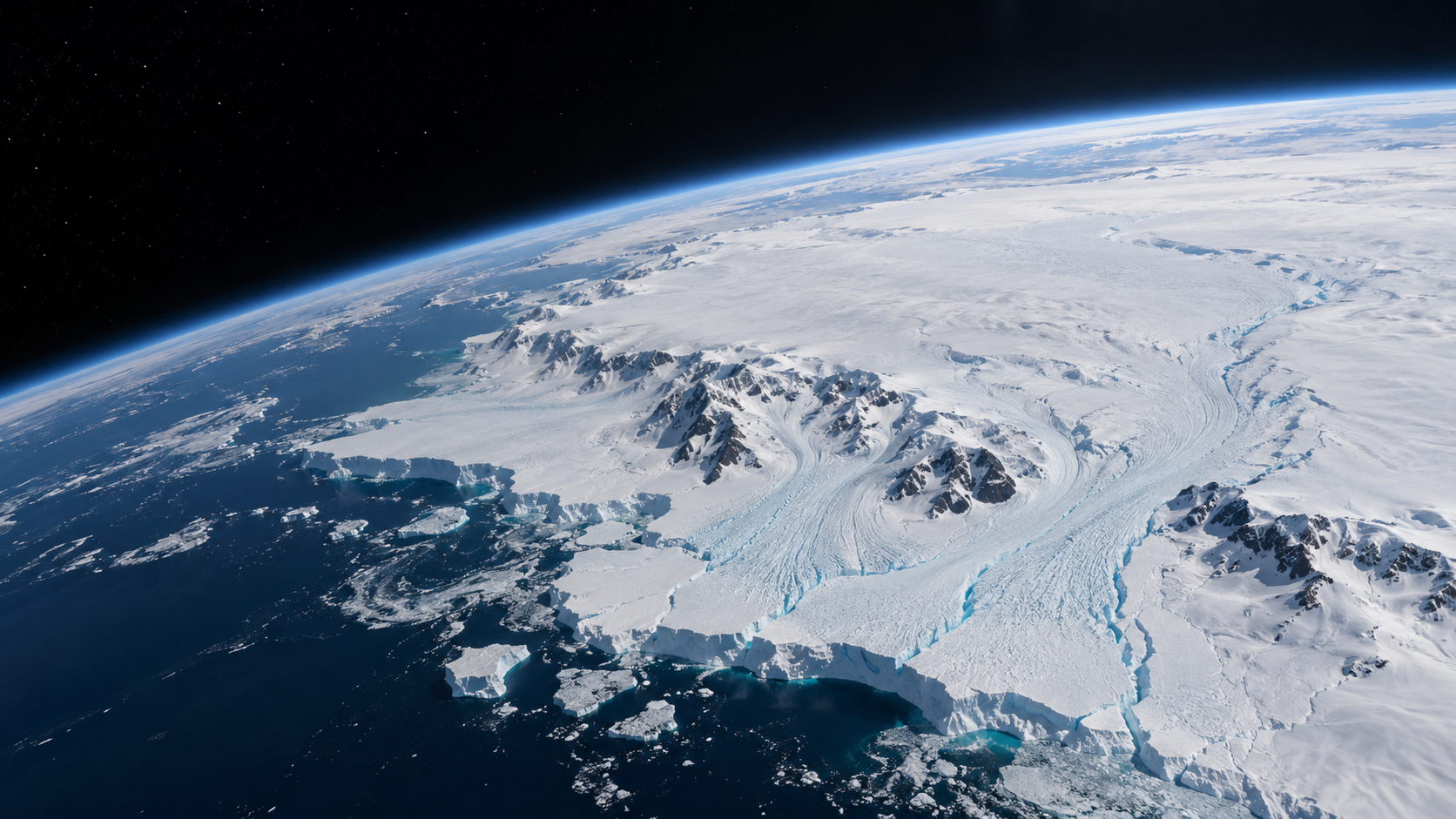
Current projections account for surface melting, ocean-driven melting, glacier flow, ice-shelf weakening, calving and grounding-line retreat. Marine ice-cliff instability proposes another mechanism: very tall ice faces at the ocean edge could collapse under their own weight, causing rapid retreat and exposing new cliffs farther inland.
The global survey tests whether real ice cliffs behave in ways that support the fastest versions of this theory. Its findings concern one disputed mechanism, not the broader evidence of human-caused warming and ice loss. Source 1
What Is Marine Ice-Cliff Instability?
A marine ice cliff is a steep ice face at the edge of a glacier or ice sheet where the ice meets the ocean. If the ice is grounded on the seabed rather than floating, its movement into the ocean can contribute directly to global sea-level rise.
The proposed process is:
- A floating ice shelf or glacier front retreats.
- A tall ice cliff becomes exposed above the ocean.
- Gravitational stress contributes to structural failure.
- Large blocks break away through calving or fracture.
- Repeated collapse causes the ice front to retreat.
- Another tall cliff becomes exposed farther inland.
If this sequence continues, each collapse could help trigger the next. A taller exposed face has greater weight and may experience greater internal stress, but height alone does not determine stability. Ice strength, cracks, water pressure, temperature, snow, debris, ocean conditions, ice mélange and glacier-front geometry also matter.
The potential effect depends on whether the cliff is connected to grounded ice, whether collapse causes sustained inland retreat, how quickly the glacier flows, whether ice shelves provide buttressing, the slope of the bedrock and the availability of upstream ice.
Why Scientists Disagree
Earlier modeling suggested that tall marine ice cliffs could produce rapid retreat and higher sea-level outcomes. However, results depend strongly on assumptions about ice strength, fracture development, crevasse depth, calving rates, ice-shelf buttressing, glacier speed, cliff geometry and ocean melting.
A model that treats ice as weak and heavily fractured may produce rapid collapse. A model that represents stronger or more resistant ice may produce slower retreat. A mechanism can therefore be physically plausible while its importance in the real world remains uncertain.
The central question is not whether ice cliffs can collapse. They clearly can. The question is whether collapses commonly repeat at the speed and scale required to make a major additional contribution to future sea-level rise.
Observations from one glacier cannot necessarily resolve a global theory. Local bedrock, ice strength, geometry and ocean conditions may be unusual, while short observation periods may miss slower structural changes or rare events. Satellite imagery has transformed glacier research, but two-dimensional images do not always reveal a cliff’s three-dimensional structure, and ice mélange or sea ice can obscure the front.
A global survey allows researchers to compare cliffs across different regions and conditions. It can show whether the proposed failure pattern occurs repeatedly, and whether cliffs instead remain stable, retreat slowly or collapse without triggering sustained inland retreat.
What the Survey Examines
The survey compares observed cliff characteristics and behavior with the assumptions required for rapid, self-sustaining collapse. It addresses three separate questions:
- How often do ice cliffs collapse?
- Can one collapse reliably create conditions for the next?
- Could the process remove enough ice to alter global sea-level projections?
A survey can provide evidence for the first question and help evaluate the second. Estimating the global sea-level effect also requires information about glacier flow, grounding lines, bedrock, ocean conditions and the amount of upstream ice. The survey is therefore not a direct measurement of future sea-level rise. It tests whether one proposed pathway to accelerated ice loss is widespread, persistent and fast enough to influence projections.
Researchers are examining whether cliffs reach the heights and geometries assumed in instability scenarios, whether they repeatedly collapse under their own weight, how quickly they retreat and whether ice mélange, floating ice shelves, debris, snow or local bedrock provide stabilization. Seasonal conditions may also affect the frequency and scale of collapse.
What the Findings Mean
If observed cliffs do not consistently behave as assumed in the fastest scenarios, that would weaken the case for automatically adding a large ice-cliff contribution to every future projection. It would not mean that rapid sea-level rise is impossible or that ice sheets are not losing mass. It would mean that one proposed acceleration mechanism may be less certain, less widespread or more dependent on local conditions than the strongest scenarios assume.
The mechanism could still matter in specific locations or under future conditions that differ from those observed today. Relevant changes include warmer ocean water at glacier fronts, weakened or vanished ice shelves, faster glacier flow, increased surface melting, more water entering fractures, retreat into deeper bedrock basins and changes in ice mélange or sea ice.
Sea-level science distinguishes between the most likely projection range and lower-probability outcomes with severe consequences. Unresolved processes can widen the upper end of the range even when they are not expected to dominate the central estimate. The survey helps determine whether ice-cliff instability should substantially shift that upper end.
The Broader Climate Context
The IPCC has concluded that human activity has unequivocally warmed the atmosphere, ocean and land. It has also found that climate impacts and extreme events intensify with every additional increment of warming. Source 3
Warming affects ice sheets through multiple pathways. Warmer ocean water can increase melting beneath ice shelves and at glacier fronts, while warmer air can increase surface melting in some regions. Ice-shelf weakening can reduce the resistance that slows inland ice flow.
The marine ice-cliff debate concerns the pace and scale of future ice loss. It does not challenge the evidence that climate change is occurring or that warming is affecting the cryosphere. Rapid, large-scale emissions reductions can limit future warming and reduce pressure on ice sheets. Because ice-sheet responses can continue for centuries, present emissions influence long-term sea-level change. Source 3
Improving Future Projections
Future research can combine high-resolution satellite imagery, airborne radar, repeat topographic mapping, time-lapse photography, ocean measurements and seismic monitoring of calving events. Longer records can reveal collapse frequency, retreat rates, seasonal patterns and fracture development.
Ice-sheet models also need to represent three-dimensional fracture networks, ice damage, calving geometry, ocean-driven melting, ice-shelf buttressing, bedrock shape and grounding-line movement. Testing models against observed cliff behavior can make uncertainty more transparent and physically grounded.
Communication should distinguish among observed processes, modeled outcomes, remaining uncertainties, likely results and damaging possibilities. Governments need the best-supported projection range for routine planning while also considering lower-probability scenarios with severe consequences.
What the Survey Does Not Change
The survey does not eliminate the risk of sea-level rise, reverse observed warming or replace the IPCC’s broader climate assessment. Other processes can accelerate or slow ice loss, including ocean warming, surface melting, ice-shelf collapse, glacier dynamics and grounding-line retreat.
The continuing priorities are rapid emissions reductions, ice-sheet monitoring, updated sea-level projections, coastal adaptation and infrastructure designed for a range of outcomes, including higher-impact scenarios.
Conclusion
Scientists are testing whether marine ice-cliff collapse could create an additional acceleration in ice-sheet retreat. The global survey evaluates whether the required cliff heights, collapse patterns and retreat rates occur commonly enough to alter future sea-level projections.
Evidence about one disputed process should refine projections, not obscure the established risks from human-caused warming and ice-sheet loss. Even if the strongest form of marine ice-cliff instability is not supported, sea levels will continue to depend on emissions, ocean warming, ice-shelf stability and glacier dynamics.
Climate policy and coastal planning should use the best available projections while preparing for uncertainty and potentially higher-impact outcomes.
Frequently Asked Questions
What is marine ice-cliff instability?
It is a proposed process in which tall ice cliffs at the ocean edge collapse under their own weight, causing rapid retreat and potentially exposing new cliffs farther inland.
Could collapsing ice cliffs cause faster sea-level rise?
They could contribute to faster sea-level rise if repeated collapse accelerates the flow of grounded ice into the ocean. The scale depends on whether the process persists under changing ice-sheet and ocean conditions.
Does the survey prove that accelerated sea-level rise cannot happen?
No. The survey tests one disputed mechanism. Evidence that weakens or qualifies marine ice-cliff instability does not eliminate other causes of rapid ice-sheet loss or future sea-level rise.
Why are ice-sheet projections uncertain?
Projections depend on interactions among ocean temperatures, surface melting, ice fractures, glacier flow, ice-shelf stability, bedrock shape and grounding-line retreat.
What does the IPCC say about broader climate risk?
The IPCC finds that human activity has unequivocally warmed the atmosphere, ocean and land. It also concludes that impacts intensify with additional warming and that rapid emissions reductions can limit future warming. Source 3
What should governments do while research continues?
Governments should reduce emissions, monitor ice sheets, update sea-level projections and design coastal infrastructure for a range of outcomes, including uncertain higher-impact scenarios.
Artikel Terkait
-
 Can Healthy Coral Help Bleached Neighbors Recover?
-
 What Created the Rocket-Plume “Space Jellyfish”?
-
 SpaceX Launches Classified USSF-481 Payload
-
 SpaceX Cargo Dragon Delivers More Than 6,000 Pounds to ISS
-
 NASA-Backed Mission Targets a Mars Moon for Sample Return
-
 West Antarctica From Space: Ice, Glaciers, and Change