What Was the Space Jellyfish Cloud in the Sky?
What Was the “Space Jellyfish” Cloud in the Sky?
Residents across several states looked up early Tuesday morning and saw a strange glowing formation spreading across the sky. Its rounded center and long, wispy trails resembled a giant jellyfish.
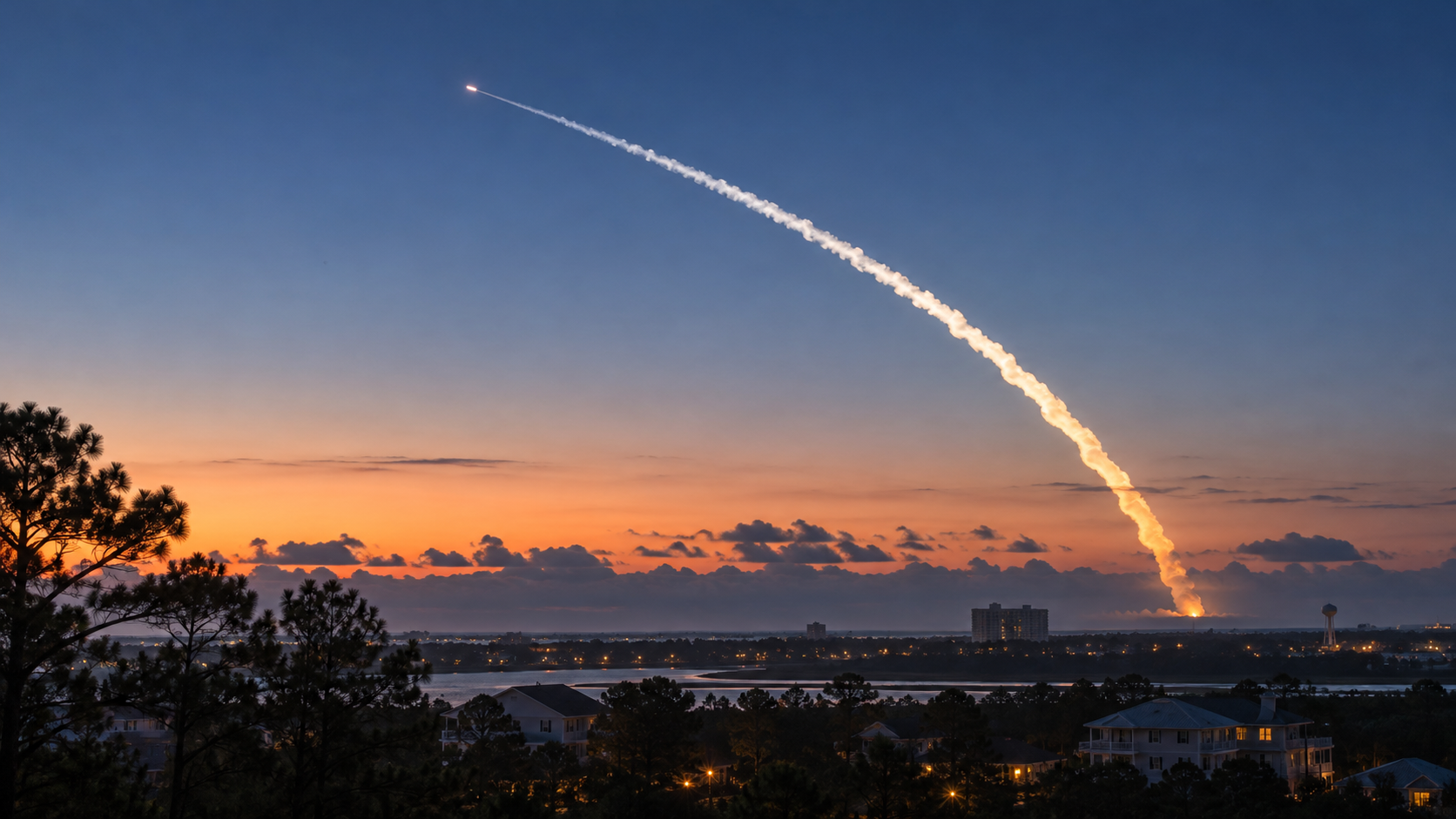
The formation was not an alien object, a new weather system, or an ordinary cloud. Reports linked it to a SpaceX Falcon 9 launch from Florida. As the rocket climbed, its exhaust expanded through the upper atmosphere and caught the sunlight, creating a dramatic cloud-like display visible from hundreds of miles away.
Sightings were reported in South Florida, North Georgia, and central Pennsylvania. The event shows how rocket launches can create spectacular atmospheric effects, particularly around dawn and dusk.
What Was the “Space Jellyfish”?
“Space jellyfish” is an informal description, not a scientific term. It refers to the shape formed when rocket exhaust expands high above Earth.
A plume can resemble:
- A jellyfish with a glowing body and trailing tentacles
- A translucent mushroom cloud
- A small nebula
- An aurora-like glow
- A bright cloud rising along a fixed path
The appearance changes quickly as the rocket passes through different atmospheric layers. A narrow, bright trail can spread into a broad, glowing structure within minutes.
The reported formation was associated with a SpaceX Falcon 9 launch. Coverage from Florida described a jellyfish-like cloud created as the rocket’s exhaust interacted with the upper atmosphere. Source 3
The Falcon 9 Launch Behind the Sightings
The Falcon 9 lifted off at approximately 6:33 a.m. from Cape Canaveral Space Force Station in Florida. The rocket carried more than 6,300 pounds of supplies and equipment for the International Space Station. Source 5
The timing created the glowing effect. A launch shortly before sunrise can produce a bright plume against a dark or partly dark sky. The ground may still be in twilight while the upper exhaust reaches direct sunlight.
Rocket plumes can be visible across a wide region because they rise far above the surface and reflect sunlight over long distances. Clear skies, transparent air, the launch direction, and the observer’s viewing angle all affect visibility.
Reports described sightings in:
- South Florida
- North Georgia
- Central Pennsylvania
A report from FOX 5 Atlanta said the formation was visible across North Georgia. Source 9
The Evening Sun also reported that the launch was visible from central Pennsylvania while asking readers whether they had seen it. That report supports regional visibility but provides limited detail about the exact appearance from that location. Source 7
Why the Plume Looked Like a Jellyfish
Falcon 9 engines produce high-speed exhaust gases, including hot combustion products and water vapor. As the rocket rises into thinner air, the plume expands rapidly.
Near the ground, atmospheric pressure helps constrain the exhaust. At higher altitudes, lower pressure allows the gases to spread farther. Wind in different atmospheric layers can stretch the plume into curved or uneven strands, creating the appearance of tentacles beneath a luminous central body.
The visible formation is not a solid object. It consists of expanding exhaust products and atmospheric particles interacting with light. Its boundaries shift continuously as the rocket climbs and the gases disperse.
The main visual effect comes from the contrast between the dark ground and the sunlit upper atmosphere. The plume reflects and scatters sunlight toward observers below, while the sky remains dark enough to make the exhaust stand out.
Colors can vary with sunlight, camera exposure, atmospheric conditions, and plume density. Observers may see white or pale yellow light, while photographs can show pink, orange, blue, or purple tones.
Staging, changes in engine activity, and fuel venting may contribute to separate bright features. However, the available reports do not provide a complete technical breakdown of every visible part of this formation. These effects should therefore be treated as possible contributors, not confirmed explanations for the exact shape.
How It Differed From an Ordinary Cloud
A rocket plume can:
- Change shape within seconds or minutes
- Spread rapidly at high altitude
- Move along a clear path
- Appear to rise rather than drift horizontally
- Fade as the exhaust disperses
The jellyfish comparison comes from the combination of a concentrated bright region and long, translucent trails. A plume may show a luminous core, a broadening upper section, wispy strands, and sharp contrast with the morning sky.
Smartphones can make the effect appear larger and brighter. Automatic exposure, night-mode processing, and long exposures may reveal colors and details that are difficult to see with the naked eye. When reviewing images online, compare timestamps, locations, and unedited footage. A dramatic image may show the same plume from another angle, a separate launch, or an enhanced version of the original scene.
Was the Space Jellyfish Dangerous?
The reported cloud was associated with a planned Falcon 9 launch and appeared high in the atmosphere. An unusual plume does not, by itself, indicate that a rocket is malfunctioning or that people on the ground face an immediate threat.
The available reports do not support specific conclusions about local air quality or environmental effects. Those questions require technical information from launch authorities and environmental agencies.
Other phenomena can also produce unusual sky appearances, including wildfire smoke, lenticular clouds, aircraft contrails, auroras, meteors, and ordinary cloud formations. Before drawing conclusions, check official launch schedules, local weather services, emergency alerts, reputable news reports, and original images with timestamps.
How to Identify a Rocket Plume
A possible rocket jellyfish cloud usually has several of these characteristics:
- It appears shortly after a scheduled launch.
- It glows before sunrise or after sunset.
- It expands or changes shape quickly.
- It has a bright center with trailing strands.
- It is visible across a broad region.
- It follows a distinct trajectory rather than drifting like an ordinary cloud.
- It fades as the exhaust disperses.
No single feature proves the identification. Timing, location, launch direction, and visual appearance provide the strongest evidence together.
Rocket Plume vs. Other Sky Phenomena
Rocket plume: Often bright, diffuse, and visible during twilight after a known launch. It may expand high above Earth and appear jellyfish-like.
Contrail: Usually narrower and more linear, forming behind an aircraft along a recognizable flight path. It generally lacks a large, glowing central head.
Aurora: Can form curtains, arcs, waves, or bands across a broad area, but usually does not resemble a single rising plume tied to a specific trajectory.
Meteor: Appears suddenly and typically disappears within seconds. It creates a fast streak rather than a slowly expanding cloud, although a persistent train may remain briefly.
Ordinary cloud: Responds to wind and weather conditions and usually lacks a concentrated glow connected to a scheduled launch.
What to Watch for During Future Launches
Monitor SpaceX announcements, Cape Canaveral launch schedules, local news alerts, and official spaceflight updates. Launch times can change because of weather, technical inspections, or range restrictions.
Choose an unobstructed viewing location facing the launch site. Darker surroundings can help, although city lights do not necessarily prevent visibility. Never enter restricted areas or interfere with launch operations to improve the view.
Prepare a phone or camera before launch time. Use a stable surface to reduce motion blur, record continuously, and save the exact time and location with the image. These details make later verification easier.
What the Reports Confirm
The available reporting supports these points:
- A glowing formation resembling a “space jellyfish” appeared in the morning sky.
- A SpaceX Falcon 9 launched from Cape Canaveral Space Force Station.
- Liftoff occurred at approximately 6:33 a.m.
- The rocket carried more than 6,300 pounds of cargo to the International Space Station.
- Reports described visibility from Florida, North Georgia, and central Pennsylvania.
- The unusual appearance was linked to rocket exhaust at high altitude.
The reports do not provide a complete technical explanation for every feature of the plume. They also do not establish that every photograph circulating online shows the same moment or launch. Exact altitude, chemical composition, and the specific stage event responsible would require authoritative technical documentation.
Conclusion
The “space jellyfish” was a glowing rocket plume associated with a SpaceX Falcon 9 launch from Cape Canaveral. Exhaust expanded in the upper atmosphere while sunlight illuminated it above observers who were still experiencing darkness or twilight on the ground.
The combination of altitude, exhaust, sunlight, and timing allowed people across several states to see the formation. Its bright center and thinner trailing strands created the appearance of a giant jellyfish.
The next time an unusual cloud appears at dawn or dusk, check launch schedules before assuming an unknown or supernatural cause. A timestamp, location, and comparison with verified launch information can often solve the mystery quickly.
Frequently Asked Questions
What was the “space jellyfish” cloud?
It was a glowing rocket plume associated with a SpaceX Falcon 9 launch. Exhaust expanded in the upper atmosphere and formed a jellyfish-like shape when viewed from the ground.
Why did the rocket plume glow?
The launch occurred around dawn. The ground remained dark or dim while sunlight reached the higher-altitude exhaust, causing it to reflect and scatter light toward observers.
Where was it visible?
Reports described sightings in South Florida, North Georgia, and central Pennsylvania. Visibility depended on weather, viewing angle, launch direction, distance, and atmospheric transparency.
Was it a real cloud?
It was not an ordinary weather cloud. It was an expanding mixture of rocket exhaust and atmospheric particles that appeared cloud-like from the ground.
Was the glowing cloud dangerous?
The reported formation came from a planned rocket launch and was located high in the atmosphere. The visible plume did not indicate an immediate danger to people watching from the ground.
How can I identify one next time?
Look for a scheduled launch, a bright central plume, rapid expansion, long trailing strands, and visibility near dawn or dusk. Compare the sighting time and location with official launch information and reliable local reporting.
Artikel Terkait
-
 Honey Bee Stingers Keep Pumping Venom After Detachment
-
 How Organoids in Space Could Improve Human Health
-
 Why Timekeepers Want to Eliminate Leap Seconds
-
 SpaceX Launch May Be Visible in North Carolina Tuesday
-
 Jurassic Fossil Reveals Origins of Mammalian Milk Feeding
-
 Could Worlds Be More Habitable Than Earth?