Volkswagen Plans $4 Billion Audi SUV Plant in U.S.
Volkswagen Plans $4 Billion Audi SUV Plant in the United States
Volkswagen is reportedly planning a $4 billion Audi SUV factory in the United States, expanding the German automaker’s production footprint in North America while its German operations face workforce reductions.
The reported investment highlights a difficult strategic contrast: Volkswagen could create thousands of jobs in the United States while reducing employment and restructuring plants at home.
The project could help Audi serve American customers more efficiently, reduce reliance on imported vehicles, limit exposure to trade disruptions, and strengthen its position in the competitive U.S. premium SUV market. However, several important details remain unconfirmed.
The available reports do not establish a final construction schedule, exact site, production capacity, vehicle lineup, powertrain mix, or funding structure. One report connects the project to Georgia, while another says Audi could create approximately 4,500 jobs. These claims should therefore be treated as reported information rather than a complete official announcement.
What Volkswagen Is Reportedly Planning
According to the supplied reports, Volkswagen plans to invest $4 billion in a new Audi SUV production facility in the United States. If confirmed, the project would represent a major commitment to Audi’s North American manufacturing strategy.
A new vehicle plant could include body shops, paint operations, final assembly lines, logistics areas, quality-control facilities, and administrative and engineering functions. The reports do not confirm annual production capacity, a completion date, specific Audi models, or the project’s funding structure.
The final economic impact would depend on construction progress, factory utilization, vehicle demand, and the number of permanent positions created.
Reported Creation of 4,500 Jobs
A report attributed to Business Day says Audi plans to create approximately 4,500 jobs through the new U.S. factory. Potential positions could include:
- Vehicle assembly and manufacturing roles.
- Maintenance and equipment technicians.
- Engineers and production planners.
- Logistics and supply-chain employees.
- Quality-control specialists.
- Administrative and management staff.
The factory could also support indirect employment among suppliers, construction companies, transport operators, maintenance contractors, and local service businesses.
The available source material does not clarify whether the 4,500 figure refers only to permanent factory employees. It could include construction jobs, supplier employment, or a broader estimate. Until Audi or Volkswagen publishes a detailed employment plan, the figure should be described as a reported projection.
The Reported Georgia Connection
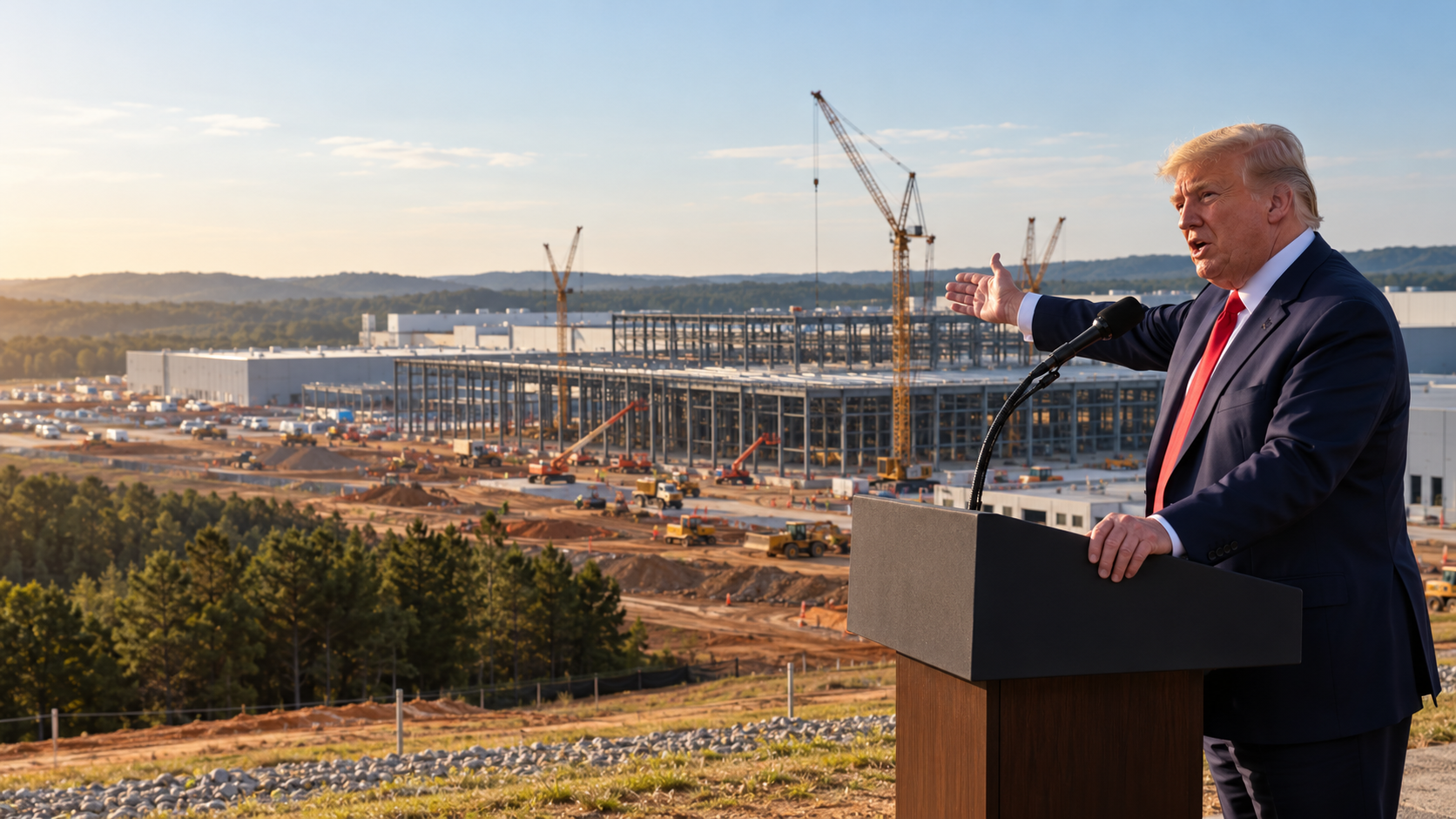
One supplied report links the proposed Audi factory to Georgia. Another says former President Donald Trump announced plans for a new Audi factory in the state during a campaign rally. The reports do not provide a confirmed site address, development agreement, construction schedule, or company documentation.
Important unanswered questions include:
- Which city or county would host the plant?
- Has Volkswagen selected or purchased land?
- What state and local incentives are under consideration?
- When would construction begin?
- Which suppliers would support the factory?
- Would the site produce only SUVs or other Audi vehicles as well?
A final announcement from Volkswagen, Audi, or relevant government agencies would be needed to confirm these details.
Why Audi May Be Expanding U.S. Production
Producing Vehicles Closer to American Customers
Local manufacturing could give Audi greater control over its U.S. business. Producing vehicles near American customers could reduce shipping distances, limit exposure to international logistics disruptions, and improve inventory planning.
A U.S. factory could also help Audi respond more quickly to changes in American demand. SUVs are particularly important in the U.S. market, including the premium segment. Local production could allow Audi to align output more closely with dealer needs instead of relying primarily on imported vehicles.
Domestic production may improve delivery times, although it would not automatically reduce retail prices. The effect on pricing would depend on manufacturing costs, logistics savings, exchange rates, tariffs, incentives, and Audi’s pricing strategy.
Reducing Trade and Tariff Exposure
Producing vehicles in the United States could reduce Audi’s dependence on imports. That may become more valuable when trade policy is uncertain or governments consider tariffs and other barriers affecting imported vehicles and components.
The supplied reports do not identify a specific tariff policy as the reason for the proposed investment. The commercial case may involve market access, logistics, supply-chain resilience, and political considerations.
The Telegraph reportedly criticized Audi over claims that it yielded to pressure from Donald Trump. The report presents the controversy but does not prove how much political pressure influenced Audi’s decision. The investment could therefore serve both commercial and political purposes.
Strengthening Audi’s Premium SUV Strategy
SUVs are strategically important to premium automakers because they offer broad consumer appeal and generally higher transaction prices than many smaller vehicles. Audi could use a U.S. plant to serve American preferences more directly and adjust supply without relying entirely on imported inventory.
The reports do not identify which Audi models would be built at the factory. Claims about specific future vehicles should wait for confirmation from Audi or Volkswagen.
The Contrast With Job Cuts in Germany
Volkswagen’s Domestic Restructuring
The proposed U.S. factory comes as Volkswagen faces job cuts and restructuring in Germany. The supplied reports do not provide a confirmed figure for the number of German positions affected, but they emphasize the contrast between investment in the United States and workforce reductions at home.
German vehicle manufacturing faces several structural pressures, including high operating costs, weak demand in some segments, stronger international competition, and the expensive transition toward electric vehicles. Energy expenses, labor costs, regulatory requirements, and productivity challenges may also affect the competitiveness of older plants.
These factors provide context, but the supplied material does not establish that each one directly caused the reported job cuts. Volkswagen’s restructuring may reflect a combination of market conditions, production planning, and corporate cost controls.
Why U.S. Hiring and German Cuts Can Occur Together
New investment in one country does not necessarily replace jobs lost in another. A U.S. factory could serve regional demand, while German plants reduce excess capacity or adapt to a different vehicle portfolio.
The two operations may also face different labor costs, energy prices, supply chains, and consumer markets. A company can add capacity where it expects growth while reducing staffing where current production is considered too expensive or inefficient.
The more accurate description may be capital reallocation across markets. The U.S. plant would not necessarily replace German jobs or production unless Volkswagen confirms that the facilities are directly linked.
Political and Labor Sensitivity
The project is politically sensitive because Volkswagen could appear to be reducing employment in Germany while promising thousands of U.S. jobs. U.S. politicians may claim credit for attracting the factory, while German policymakers face pressure to protect industrial employment.
Employees and unions are likely to focus on job security, plant investment, and the future of German production. Investors may instead examine whether the $4 billion commitment can deliver acceptable returns.
Three interpretations are possible:
- Volkswagen may be responding to regional demand and operating conditions.
- The company may be limiting trade exposure by producing more vehicles in the United States.
- Political pressure may have influenced the project’s location or timing.
The supplied sources do not establish which explanation is dominant.
Potential Benefits for the United States
A completed Audi factory could generate several local and regional benefits:
- Direct manufacturing employment.
- Construction and infrastructure activity.
- Supplier contracts.
- Technical training opportunities.
- Additional tax revenue.
- Growth for logistics and service businesses.
The long-term effect would depend on wages, production volumes, supplier localization, and the plant’s ability to operate continuously. A large initial investment does not guarantee permanent economic growth.
If Georgia is confirmed as the location, the project could reinforce the Southeast’s role as a major automotive manufacturing region. A new premium-brand plant could expand the supplier base and strengthen transportation networks, while also increasing competition for skilled workers.
Large automotive projects often involve public support, such as tax credits, land assistance, infrastructure spending, or workforce-development funding. If incentives are offered, public agencies should disclose their value, duration, job and wage requirements, production milestones, and clawback provisions.
Risks to the Business Case
The reported project could face several risks:
- Construction delays.
- Cost overruns.
- Lower-than-expected SUV demand.
- Changes in trade policy.
- Supply-chain disruptions.
- Skilled-labor shortages.
- Slow adoption of electric vehicles.
- Weak pricing or intensified competition.
The plant’s success would also depend on Audi’s ability to launch vehicles that appeal to American consumers. Local manufacturing cannot compensate for an uncompetitive product range or poor market timing.
The reports do not establish whether the factory would build internal-combustion SUVs, hybrids, battery-electric vehicles, or a flexible combination. That distinction matters because each powertrain requires different suppliers, manufacturing capabilities, regulatory planning, and market assumptions.
Is Volkswagen Moving Jobs Out of Germany?
The announcement may create that impression, but the supplied sources do not prove that the U.S. facility directly replaces German production. Volkswagen may be adding capacity for the U.S. market, reducing excess capacity in Germany, consolidating production geographically, or building vehicles that German facilities do not currently produce.
Relocating existing production would have different implications from building new regional capacity. Without confirmed production plans and German plant data, it is not possible to describe the U.S. project as a direct transfer of jobs.
Volkswagen’s restructuring reflects broader challenges facing Germany’s automotive sector, including labor expenses, energy costs, regulatory changes, international competition, and the transition to new vehicle technologies. Germany remains central to Volkswagen’s identity and engineering base, but its plants must remain competitive against lower-cost and faster-growing manufacturing regions.
Key Facts to Watch
The most important details to confirm are:
- Final factory location.
- Investment amount and funding structure.
- Construction and production timeline.
- Number and type of permanent jobs.
- Planned Audi SUV models.
- Powertrain mix.
- State and local incentives.
- Supplier commitments.
- Volkswagen’s official explanation.
- Confirmed details of German job cuts.
- Final corporate and regulatory approvals.
These facts will determine whether the project is a firm manufacturing commitment or an early-stage plan.
Conclusion
Volkswagen is reportedly planning a $4 billion Audi SUV factory in the United States, with one report projecting approximately 4,500 jobs. Another report links the project to Georgia, while coverage has connected the announcement to political pressure from Donald Trump. The available information does not yet confirm the factory’s exact site, timeline, capacity, models, powertrains, or incentive package.
The investment illustrates the tension between global expansion and domestic restructuring. Volkswagen may be adding U.S. capacity to serve American customers, reduce import exposure, and strengthen Audi’s position in the premium SUV market. At the same time, job cuts in Germany raise difficult questions about costs, productivity, and the future of Volkswagen’s home-market manufacturing base.
The project could reflect commercial logic, trade-policy concerns, political influence, or a combination of all three. Its importance will depend on execution, vehicle demand, public support, and Volkswagen’s ability to improve its wider cost structure.
The central unresolved question is whether the factory represents sustainable global growth or a deeper shift away from Volkswagen’s traditional German manufacturing base.
Frequently Asked Questions
Why is Volkswagen planning a $4 billion Audi factory in the United States?
Volkswagen is reportedly expanding Audi production in the United States to serve American customers more locally and potentially reduce exposure to import costs, trade barriers, and supply-chain risks. The supplied reports do not provide a complete official explanation.
How many jobs could the Audi factory create?
One supplied report says the project could create approximately 4,500 jobs. The available information does not clarify whether this figure includes only permanent factory positions or also construction and indirect employment.
Where will the new Audi factory be built?
One report links the project to Georgia. The supplied summaries do not provide a confirmed site address, final site approval, or detailed construction plans.
Why is Volkswagen cutting jobs in Germany while investing in the United States?
The two actions may reflect different market and operating needs. Volkswagen may be adding U.S. capacity while reducing excess capacity or costs in Germany. The available reports do not show that the U.S. factory directly replaces the German jobs being eliminated.
Is the factory being built because of pressure from Donald Trump?
One supplied report says Audi faces criticism over claims that it yielded to pressure from Donald Trump. Other material says Trump announced plans for a new Audi factory in Georgia during a campaign rally. The sources do not prove how much political pressure influenced Volkswagen’s decision.
Which Audi SUV models will the factory produce?
The supplied reports do not identify the planned models or confirm whether production will include gasoline, hybrid, electric, or multiple types of SUVs. Model and powertrain details should be added only after confirmation from Volkswagen or another authoritative source.
Sources
Artikel Terkait
-
 Wonder Bets on Texas, Automation and User-Built Restaurants
-
 Tech Earnings Playbook: Alphabet, Microsoft and Amazon
-
 Home Sellers Cut Prices and Offer Buyer Incentives
-
 Americans’ Stock Exposure Reaches a Record High
-
 Trump Announces Audi’s Planned $4 Billion Georgia Factory
-
 Will AI Expose the Internet’s Fragile Infrastructure?