US Orders Some Diplomats to Leave Saudi Arabia
US Orders Some Diplomats to Leave Saudi Arabia as Houthi Attacks Escalate
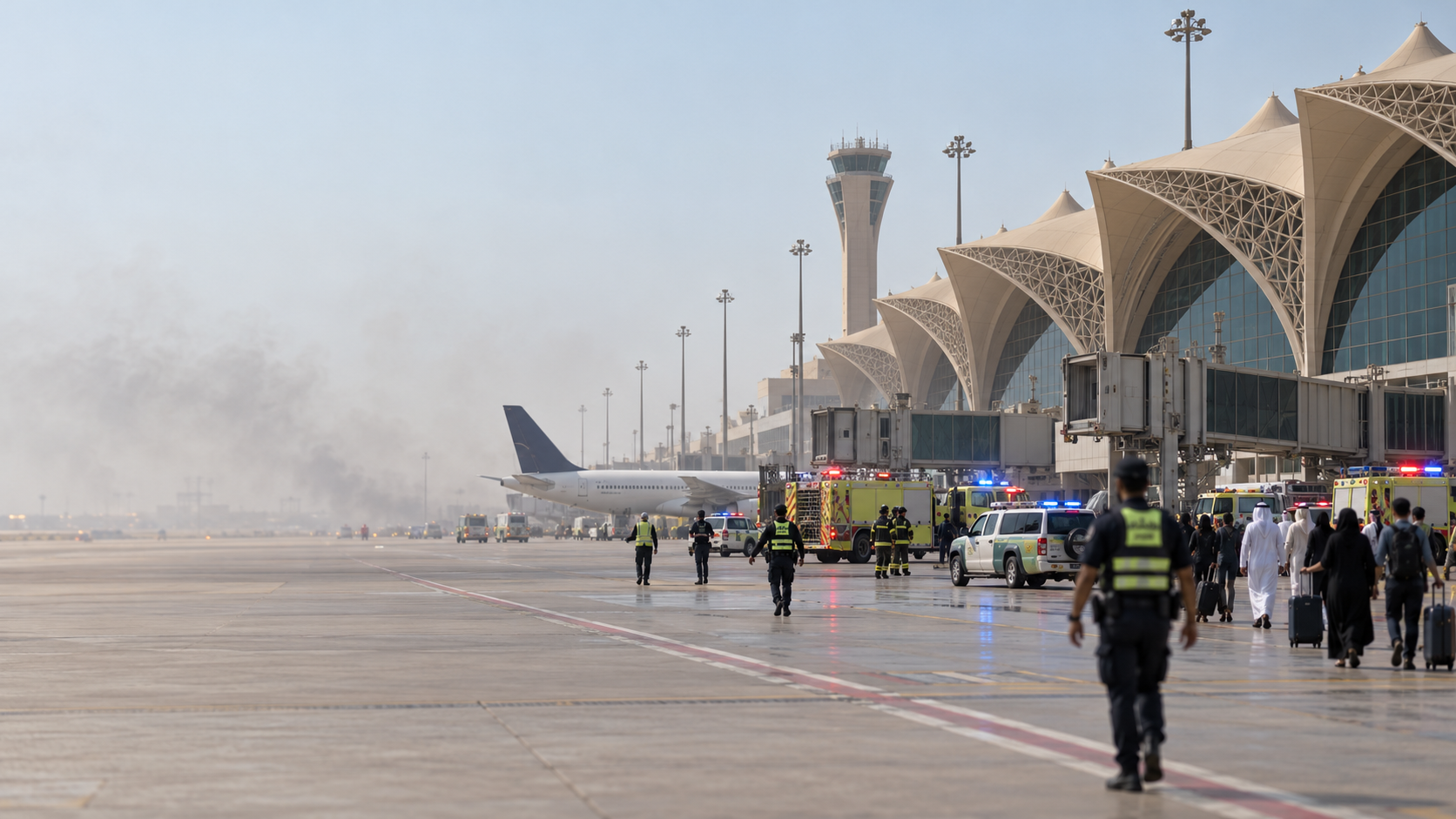
The United States has ordered some diplomats and their family members to leave Saudi Arabia as Houthi attacks escalate, according to reports attributed to the BBC and Haaretz. The decision reflects growing concern about the safety of American personnel amid wider regional tensions.
The reported action does not appear to represent a complete closure of the US Embassy or a total diplomatic withdrawal. It concerns selected personnel and families. The available reports do not establish the exact number of people affected, the locations involved, or how long the order will remain in effect.
What the United States Ordered
Available reports say that some US diplomats were ordered to depart Saudi Arabia and that family members were included in at least one account. The measure appears to be a security-related departure order rather than the removal of all US diplomatic employees.
These measures have different meanings:
- Ordered departure: Selected personnel must leave under official instructions.
- Authorized or voluntary departure: Personnel and families may leave if they choose.
- Evacuation: A broader emergency operation to remove people from danger.
- Diplomatic suspension: Embassy or consular operations are reduced or halted.
- Embassy closure: The diplomatic mission stops operating at its normal location.
The available reports identify an ordered departure involving some personnel. They do not establish that the United States has evacuated all diplomats, suspended embassy operations, or closed its embassy.
A decision to remove diplomats and their families generally signals that a government has reassessed the risks facing its personnel. Possible concerns include missile and drone attacks, threats to diplomatic facilities, dangerous domestic travel, and the risk of a wider regional conflict.
The order does not prove that an attack has occurred at a US diplomatic compound or that American facilities were specifically targeted. Governments often take preventive action when intelligence or local conditions indicate that risks may be increasing.
Embassy Services May Continue
The departure of some diplomats does not automatically mean that the US Embassy in Saudi Arabia has closed. A mission can maintain essential functions with reduced staffing or revised operating procedures.
Possible continuing functions include:
- Emergency assistance for US citizens.
- Communication with Saudi authorities.
- Security coordination.
- Political reporting and diplomatic contacts.
- Essential consular services.
- Crisis-response planning.
The status of specific services remains unclear from the supplied reports. US citizens and other affected individuals should rely on official US Department of State and embassy notices rather than assuming that services have either continued normally or stopped entirely.
Why Houthi Attacks Raise Security Concerns
The Houthis are an armed movement based in Yemen that has previously fought Saudi Arabia and used missiles and drones in attacks connected to the wider regional conflict.
The security risk extends beyond whether an attack strikes an American facility. An incident near a city, airport, energy installation, or diplomatic compound can disrupt movement and force governments to change security procedures. It can also create uncertainty about whether later attacks will become more frequent, accurate, or broadly targeted.
Missile and drone attacks can threaten:
- Civilian population centers.
- Airports and aviation routes.
- Energy infrastructure.
- Ports and commercial shipping.
- Government facilities.
- Diplomatic compounds.
- Roads and transportation networks.
Even when air defenses intercept a weapon, falling debris can injure people or damage property. Interceptions can disrupt air traffic, while repeated attacks can affect daily life and business operations.
The wider regional conflict increases uncertainty. Tensions in one country can affect another through military responses, political alliances, airspace concerns, and threats to trade routes. For Saudi Arabia, potential risks include direct attacks, spillover from neighboring conflicts, transportation disruptions, and pressure on critical infrastructure.
The available reports describe the attacks as escalating but do not provide a complete, independently verified account of every incident or the full operational basis for the US decision. Claims about responsibility, targets, and damage require confirmation from official statements and established news organizations.
What the Move Means for US-Saudi Relations
The reported departure order appears primarily connected to personnel safety. On its own, it does not demonstrate a political breakdown between Washington and Riyadh.
The United States and Saudi Arabia can continue diplomatic and security coordination while reducing the number of American personnel exposed to danger. Governments regularly adjust embassy staffing during security crises without ending formal relations or suspending all cooperation.
A limited departure can reduce the number of people at risk while preserving a smaller diplomatic presence for essential communication. The political message may still be significant: removing families and selected diplomats signals that Washington considers the security environment serious enough to justify exceptional precautions.
Security cooperation may include:
- Monitoring missile and drone threats.
- Coordinating air and missile defense information.
- Protecting energy and transportation infrastructure.
- Planning emergency responses.
- Sharing intelligence where appropriate.
- Supporting the safe movement of diplomatic personnel.
The available reports do not confirm any particular new agreement, military operation, or defensive deployment.
Potential Effects on Residents, Travelers, and Businesses
Saudi authorities may strengthen security around diplomatic compounds, airports, government buildings, energy facilities, ports, population centers, and transportation routes. Additional measures could affect road access, checkpoints, public events, and travel times.
Missile and drone threats may also affect civil aviation through delays, cancellations, temporary airspace restrictions, route changes, and enhanced airport security. Travelers should check airline notifications, airport announcements, official government advisories, and embassy notices.
Companies may review employee-protection plans, travel policies, emergency communications, housing arrangements, and business-continuity procedures. Heightened risk could also increase insurance costs or cause delays at ports and transport hubs.
The energy sector is likely to receive particular attention because Saudi Arabia is a major producer and exporter. However, the available reports do not support predictions about oil prices, production levels, or supply disruptions. Those issues require current market and operational data.
What Is Known and What Remains Unclear
The available summaries support these points:
- The United States ordered some diplomats to leave Saudi Arabia.
- At least one report says that diplomats’ families were included.
- The order came amid escalating or intensifying Houthi attacks.
- The reported rationale involves heightened security concerns linked to the regional conflict.
- The BBC and Haaretz are identified as reporting the development: Source 1 and Source 7.
The reports do not establish that the US Embassy has closed or that all diplomats have left Saudi Arabia.
Important unanswered questions include:
- How many personnel were ordered to depart?
- Did the order apply nationwide or only to selected locations?
- What was the departure deadline?
- Was the order temporary or open-ended?
- Were embassy and consular services reduced?
- Which attacks or threats prompted the decision?
- Did the United States change its travel-advisory level?
- Have other governments issued similar orders?
- Did Saudi authorities impose new security restrictions?
One supplied summary gives a publication date of October 21, 2026. That date should be checked against the original article and official statements before publication. Repeated summaries of the same report should not be treated as independent confirmation.
The entries labeled “zachary athekame,” “portal,” “french open,” “fadel muhammad,” and “kevon looney” contain numerical text without identifiable facts or context and are not usable factual sources.
What Happens Next
The United States may reassess the order as conditions change. Possible outcomes include returning personnel, extending the order, expanding it to additional staff or families, restricting movement, reducing public-facing services, or changing embassy operations.
Continued Houthi attacks could prompt stronger defensive measures, new travel warnings, and additional diplomatic consultations. The response could remain defensive and diplomatic, but the risk of miscalculation would rise if attacks became more frequent or caused significant casualties or damage. No military retaliation should be assumed without official statements.
A reduced US presence may make some coordination more difficult, but a security crisis also increases the need for reliable communication between Washington and Riyadh. Priorities include clear public warnings, secure emergency channels, airspace and travel coordination, protection of diplomatic compounds, accurate information about disruptions, and rapid assistance for affected US citizens.
Conclusion
The US order for some diplomats and family members to leave Saudi Arabia reflects a serious assessment of increased security risks as Houthi attacks intensify. Based on the available reports, it does not amount to a full US diplomatic withdrawal or confirm that the embassy has closed.
The main unanswered questions concern the number of people affected, the locations covered, the duration of the order, and its effect on embassy and consular services. Those details will determine whether the move is a temporary precaution or the beginning of a broader reduction in the US diplomatic presence.
Travelers, residents, businesses, and US citizens in Saudi Arabia should follow updates from the US Department of State, the US Embassy, Saudi authorities, airlines, airports, and established news organizations.
Frequently Asked Questions
Why did the United States order some diplomats to leave Saudi Arabia?
The reported reason is heightened security risk linked to escalating Houthi attacks and the wider regional conflict. The available summaries do not provide the full details of the US security assessment.
Did the United States close its embassy in Saudi Arabia?
The reports describe the departure of some diplomats and family members, not a confirmed embassy closure. Current services should be confirmed through official embassy notices.
Were all US diplomats removed from Saudi Arabia?
No. The reports refer to some diplomats and, in one account, their families. They do not indicate that every US diplomatic employee was ordered to leave.
What are the Houthis attacking?
The supplied reports refer generally to escalating Houthi attacks but do not provide a complete list of targets or incidents. Reported operations in the region have involved missiles, drones, shipping threats, and neighboring states, but individual claims require verification.
Does the departure mean Saudi Arabia is at war with the United States?
No. The departure order is described as a security measure. It does not establish that the United States and Saudi Arabia are in conflict with each other.
Where can people find the latest updates?
Check US Department of State travel advisories, US Embassy announcements, Saudi government notices, airline communications, airport updates, and established news organizations. Treat social media claims cautiously until independently verified.