Tesla’s Flying Roadster Signals a New Direction
Tesla’s Flying Roadster Signals a New Direction
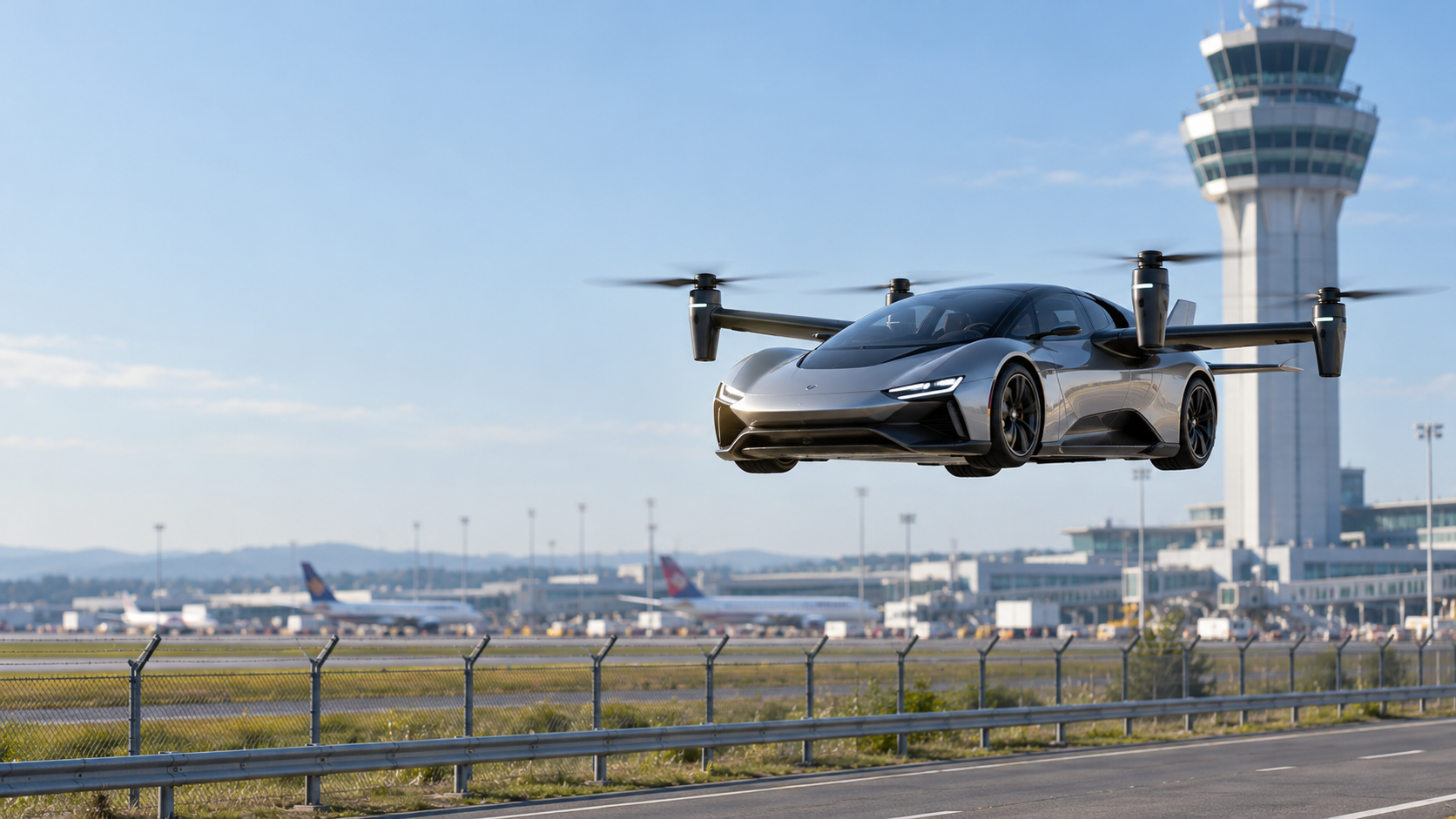
Tesla’s next Roadster is being presented as more than a fast electric sports car. Reported plans for thrusters, airborne movement, and what Elon Musk called “rockety stuff” place the vehicle closer to a technology demonstrator than a conventional production automobile. Source 3
The concept raises a broader question: Is Tesla still primarily a car company, or is it using cars as a platform for robotics, artificial intelligence, aerospace-inspired engineering, and new forms of mobility?
The answer remains uncertain. Tesla has not established that the Roadster can perform sustained flight, operate safely in public environments, or enter production on a defined schedule. CTV News reports that the vehicle is not expected to become available for driving anytime soon. Source 3
For now, the Roadster’s symbolic importance exceeds its commercial impact. It represents Tesla’s attempt to preserve its image as a company that challenges established ideas about transportation. Axios has described the flying Roadster as a possible signal that Tesla wants to move beyond conventional car manufacturing. Source 1
A Break With Conventional Cars
A technology spectacle
The reported concept is simple in ambition but difficult in engineering: a Roadster that uses thrusters to lift itself into the air. That capability would distinguish it from the usual ways electric vehicles compete, including range, charging speed, software, acceleration, and price.
Flying would not solve an everyday transportation problem. Most drivers do not need to hover above traffic. Instead, it would serve as a statement about Tesla’s technological reach, combining automotive engineering with aerospace-style systems.
Available reporting describes a proposed capability, not a proven production system. There is no confirmed evidence that Tesla has solved the engineering, safety, regulatory, and commercial challenges of a road-legal flying car.
The Roadster could therefore function as a technology spectacle. Its purpose would be to make people reconsider what Tesla builds rather than simply persuade them to buy another electric vehicle.
What “rockety stuff” means
Musk has described the upcoming Roadster as including “rockety stuff.” Source 9 The phrase suggests unconventional propulsion or performance technology, but it is not a technical specification.
Important details remain unknown, including the propulsion method, flight duration, energy consumption, control systems, passenger protection, and emergency procedures. It is also unclear whether the system would enable a brief lift, a controlled hover, or meaningful short-distance flight.
Those are different achievements. A vehicle that rises briefly is not equivalent to one that can fly safely, repeatedly, and legally in real-world environments.
Until Tesla publishes specifications and demonstrates repeatable operation, the claim should be treated as an ambitious plan rather than an established product feature.
The Roadster as a halo product
An extreme sports car can demonstrate engineering capability, attract media coverage, strengthen a brand, and provide a limited environment for testing new technology.
The Roadster’s sales volume may matter less than its visibility. A conventional sedan can generate revenue, but a flying sports car can dominate public conversation. It can connect batteries, software, sensors, propulsion, and vehicle control to a larger technological story.
Tesla’s early identity was built around the idea that an electric car could be desirable, fast, and technologically advanced. A flying Roadster would attempt to recreate that distance from ordinary competitors.
Why Tesla May Be Moving Beyond the Traditional Auto Business
Electric cars are less distinctive
Electric vehicles are no longer unique to Tesla. Traditional automakers and newer manufacturers compete across range, charging speed, software, design, price, and performance.
As the market matures, Tesla faces a familiar automotive problem: competitors can study successful products and offer alternatives. Electric propulsion remains important, but it no longer guarantees technological distinction.
The flying Roadster appears designed to restore that distinction. Range and charging improvements are valuable, but consumers can compare them in a specification table. A vehicle that lifts into the air creates a far more dramatic separation.
Tesla’s identity extends beyond vehicles
Tesla is widely viewed as more than a traditional automaker. Its public identity includes software, artificial intelligence, autonomous-driving ambitions, battery technology, advanced manufacturing, and robotics-related ideas.
The Roadster fits that wider identity. Its proposed thrusters suggest aerospace-inspired propulsion. Its operation would require sophisticated control software, lightweight materials, high-performance energy systems, sensors, and advanced safety controls.
That does not prove that every technology associated with Tesla is part of the Roadster program. It shows how the vehicle could communicate a broader corporate identity.
A platform for experimentation
A limited-production vehicle can provide a more flexible testing environment than a mass-market model. Tesla could potentially explore compact propulsion systems, flight-control software, high-performance batteries, lightweight materials, and advanced sensors through the Roadster.
The risk is reliability. A technology demonstrator can tolerate complexity, but a consumer product must deliver predictable operation, serviceability, safety, and regulatory compliance. Tesla would need to prove that its most spectacular feature does not make the vehicle too fragile or impractical to own.
What the Flying Technology Must Prove
Lift is not useful flight
The term “flying car” can describe several capabilities:
- Momentary lift.
- Controlled hovering.
- Short-distance flight.
- Repeatable travel between approved locations.
- Practical everyday operation.
Each level creates greater engineering and regulatory demands. A brief lift could show that a propulsion system produces enough force to overcome the vehicle’s weight. It would not prove that the vehicle can navigate, land safely, operate in wind, or protect passengers during a failure.
Useful flight would require three-dimensional control over acceleration, balance, altitude, direction, and landing conditions while carrying occupants.
Weight, energy, and control
A road car carries batteries, motors, bodywork, safety structures, passengers, and equipment. Lifting that mass requires substantial force and energy.
The system would also need stable thrust distribution. Uneven propulsion could cause the vehicle to tilt, rotate, or become difficult to control. Takeoff and landing would create additional risks as the vehicle transitions between ground contact and airborne movement.
Noise and heat would affect passengers, pedestrians, nearby vehicles, buildings, and operating locations. Combining road and flight capabilities could add weight, complexity, maintenance requirements, and failure points.
Safety and regulation
The Roadster would face safety questions that conventional crash testing does not fully address:
- What happens if a thruster fails?
- Can the vehicle land safely after a power interruption?
- How are pedestrians and nearby vehicles protected?
- How are occupants secured during lift and landing?
- What happens if the vehicle loses control?
- Can it operate safely near buildings or other aircraft?
Automotive standards focus on collisions, braking, steering, occupant protection, and road operation. Flight introduces additional hazards involving altitude, falling objects, propulsion failure, and airspace conflicts.
Road legality would not automatically authorize flight. The vehicle could require approval from aviation authorities as well as automotive regulators. Rules could also cover airspace, takeoff and landing zones, noise, liability, insurance, operator licensing, and urban safety.
No regulatory pathway has been confirmed in the supplied reporting. That uncertainty is central to the Roadster’s commercial prospects.
The Roadster Is Not Coming to Market Soon
CTV News reports that the Roadster is not expected to be available for driving anytime soon. Source 3
That uncertainty makes the Roadster a long-term project rather than an imminent product. During a lengthy development period, technology can change, costs can rise, regulations can evolve, and competing products can arrive first.
A public demonstration shows that a system may work under specific conditions. A prototype shows that engineers are building a functioning vehicle. A production-intent model suggests a path toward manufacturing. A certified customer product must meet safety, regulatory, reliability, and service requirements.
The Roadster must move through each stage before its claims can be evaluated as a commercial reality.
Tesla’s history of ambitious timelines also shapes public expectations. Observers should look for working prototypes, published specifications, repeatable testing, safety demonstrations, regulatory progress, and a credible production schedule.
A successful lift would demonstrate propulsion. It would not establish flight duration, reliability, insurance, legal use, or mass production.
What “Goodbye to the Car Business” Really Means
The headline is a strategic interpretation, not evidence that Tesla plans to stop manufacturing cars. Automotive production remains central to Tesla’s revenue, manufacturing scale, battery deployment, brand recognition, and software development.
The Roadster is better understood as a signal of diversification. It suggests that Tesla wants to be judged by its technological ambitions as well as its vehicle deliveries.
Cars may remain the company’s foundation even if Tesla increasingly presents vehicles as platforms for software, autonomy, energy storage, and robotics.
A technology-focused automotive company can treat the vehicle as:
- A software platform.
- An autonomous system.
- An energy-storage product.
- A robotics platform.
- An interface for mobility services.
The flying Roadster fits this redefinition by adding aerospace-style functionality to a road vehicle. Its importance lies less in the number of units sold than in the categories it connects.
Most customers still prioritize affordability, reliability, safety, comfort, service access, and charging convenience. A flying sports car cannot solve those everyday needs. The Roadster may attract attention and strengthen the brand while mainstream vehicles continue to provide volume and operational stability.
The Business Case and Its Risks
A limited-production sports car could support premium pricing, brand prestige, media exposure, and feedback from early adopters. However, no verified pricing, production volume, or profitability figures are available in the supplied sources. Any business case remains speculative.
If the technology proves viable, Tesla could potentially transfer elements of it to other products, including power management, control software, lightweight materials, battery systems, and sensors. Those benefits are not guaranteed; technology designed for a flying sports car may be too expensive or specialized for mass-market vehicles.
The opportunity costs could also be substantial. Engineering resources devoted to the Roadster might otherwise support high-volume vehicles, charging systems, service improvements, or manufacturing efficiency. A flying vehicle could create difficult servicing requirements, higher regulatory costs, and greater liability exposure.
The main risks are technical, safety-related, regulatory, and reputational. A malfunction could endanger occupants, pedestrians, drivers, buildings, or other aircraft. Repeated delays could reinforce skepticism about Tesla’s future-product claims.
How to Judge Tesla’s Direction
The first test is Tesla’s product mix. Observers should determine whether revenue and investment increasingly come from non-automotive products or services. A single high-profile concept does not prove sustained diversification.
The second test is evidence of execution:
- A functioning prototype.
- Published technical specifications.
- Repeatable testing.
- Safety certification.
- A credible production schedule.
- Customer deliveries.
Tesla’s mainstream vehicle strategy also matters. Continued investment in affordable, practical, high-volume vehicles would indicate that the Roadster complements the car business. A clear shift of resources away from mass-market transportation would support the argument that Tesla is changing its core identity.
Conclusion: The Flying Roadster Is a Corporate Signal
The Roadster matters because of what it represents, not because it is already a practical flying car.
The reported concept includes thruster-based lift, Musk’s reference to “rockety stuff,” and a timeline that remains uncertain. Source 9 Those features push beyond conventional automotive performance and support the idea that Tesla wants to be seen as something larger than an automaker. Source 1
Tesla may not be saying goodbye to cars yet. The company still depends on vehicles as its manufacturing foundation and commercial engine. But the flying Roadster signals that Tesla wants the market to see cars as one part of a wider technology strategy.
The decisive test will be whether the Roadster can move from spectacle to safe, certifiable, repeatable, and commercially useful technology.
Frequently Asked Questions
Is Tesla’s new Roadster actually going to fly?
Reports say the Roadster is designed to use thrusters to lift itself into the air. Available information does not establish whether it will support sustained flight or only limited hovering or lift demonstrations.
What did Elon Musk mean by “rockety stuff”?
Musk used the phrase to describe unconventional technology planned for the Roadster. It suggests rocket-inspired propulsion or performance features, but the supplied reporting provides no confirmed technical specifications.
When will the flying Roadster be available?
CTV News reports that the vehicle is not expected to be available for driving anytime soon. Tesla’s final production schedule, certification timeline, and customer-delivery date remain uncertain.
Is Tesla abandoning conventional cars?
No confirmed evidence shows that Tesla plans to stop making conventional vehicles. The Roadster is better understood as a signal of diversification and technological ambition.
Could the flying Roadster be legal on public roads?
Road legality would not automatically authorize flight. The vehicle could also require aviation approvals, operating restrictions, safety certification, insurance arrangements, and designated takeoff or landing areas.
Why would Tesla build a flying sports car?
The Roadster could serve as a halo product, technology demonstrator, and brand-building tool. It may help Tesla showcase propulsion, software, batteries, and control systems that support a broader technology strategy.
Artikel Terkait
-
 Tech Stocks Lose $1 Trillion as Oil Reaches $110
-
 Netflix Faces Layoffs and a Culture Credibility Test
-
 Indonesia’s MSCI Exclusion Risk and Global Capital
-
 FAA and Tesla’s Flying Roadster: What Owners Need to Know
-
 Nasdaq Faces Weekly Loss as Tech Stocks Slide
-
 Netflix Stock Falls After Content Leadership Shake-Up