Rachel Brings Coastal Flooding and Surf to Southern California
Rachel Brings Coastal Flooding and Dangerous Surf to Southern California
Rachel’s remnants brought heavy rain, dangerous surf, high-tide concerns, coastal flooding risks, and erosion threats to Southern California. Forecasts warned that the broader storm system could produce widespread flooding and hazardous conditions across the U.S. West Coast.
Conditions varied by location. Some Southern California communities avoided the worst forecast flooding because tides remained below projected levels, while powerful surf still affected exposed coastal areas. Officials also issued an evacuation order for some beachfront homes in Long Beach as large waves battered the shoreline.
What Happened as Rachel Reached Southern California?
Rachel’s remnants increased the risk of heavy rain, flash flooding, hazardous travel, coastal erosion, and rising water levels. Inland areas faced runoff, overflowing channels, poor visibility, and dangerous road conditions. Saturated soil, blocked drains, and water flowing from higher ground can produce urban flooding even when rainfall totals vary between neighborhoods.
A storm does not need to deliver the same amount of rain everywhere to cause serious disruption. Short bursts of intense rainfall can overwhelm drainage systems, flood intersections, and create dangerous conditions in low-lying areas.
Rachel’s effects depended on several local factors:
- The storm’s track and speed
- The intensity and location of rainfall bands
- The timing of high and low tides
- Wind direction and wave height
- Coastal geography
- Beach erosion and existing drainage conditions
Reports described different aspects of the storm’s impact. Some areas avoided major flooding because tides stayed below forecast levels, while other reports described significant coastal flooding. These accounts may reflect different locations, reporting times, or definitions of major flooding. The clearest conclusion is that Rachel created serious coastal hazards, with conditions varying across communities.
Why High Tides Increased the Risk
High tides reduce the space available for stormwater to drain into the ocean. When rainfall, elevated tides, strong waves, and storm surge occur together, water can accumulate more quickly along beaches, roads, drainage outlets, and low-lying neighborhoods.
The same rainfall total can produce very different results depending on the tide cycle. A drainage system may handle ordinary runoff during a lower tide but back up when the ocean is already elevated. Incoming seawater can also slow drainage through storm systems and increase street-level flooding.
Wave run-up creates another danger. Large waves can travel beyond the normal beach line, sending seawater and debris onto roads, parking areas, walkways, and private property. Repeated waves can remove protective sand and weaken structures near the shoreline.
Coastal flooding can occur without a direct hurricane or tropical-storm landfall. A weakening tropical system can still produce strong surf, persistent winds, heavy rain, and elevated water levels far from its center.
Tides that remained below forecast levels helped limit major flooding in parts of Southern California. That did not eliminate other hazards, including wave overtopping, beach erosion, damaged seawalls, flooded parking areas, and dangerous conditions near piers and harbor entrances.
Long Beach Beachfront Homes Faced Evacuation Orders
Officials issued an evacuation order for some beachfront homes in Long Beach as damaging surf affected the coastline. An evacuation order can come before widespread structural damage when surf, erosion, access problems, or rapidly changing water conditions make an exposed location unsafe.
Residents in an affected zone should leave immediately, follow official routes, and avoid delaying departure to watch waves or collect belongings. When safe to do so, evacuees should take essential medication, identification, phone chargers, important documents, and pets.
Beachfront homes face direct exposure to:
- Powerful wave impact
- Coastal erosion
- Flooded access roads
- Floating debris
- Undermined foundations
- Damaged seawalls and other protective structures
Repeated waves can cause serious damage even when water does not permanently enter a building. Waves may remove sand around foundations, break doors and windows, damage decks, or push debris against walls. A property can become unsafe because its access road, retaining wall, or nearby slope has failed.
Residents should not wait for visible structural damage before leaving if officials issue an evacuation order. They should stay away from seawalls, piers, jetties, cliffs, beaches, and other exposed areas. Flooded roads should never be used as evacuation shortcuts.
Coastal Damage and Dangerous Surf
High surf can strip sand from beaches, damage walkways, flood parking areas, move debris inland, weaken seawalls, and undermine coastal structures. Damage can increase over several tide cycles. A seawall may withstand one large wave but deteriorate after hours of repeated impact.
Coastal damage can continue after rainfall weakens. Residents should monitor closures and official notices until inspections confirm that roads, beaches, and structures are safe.
Potentially affected infrastructure includes:
- Boardwalks and beach access points
- Storm drains and flood channels
- Coastal highways
- Marinas and harbor entrances
- Parking lots and public facilities
- Utility lines and communications equipment
Road closures may remain in place after the most intense conditions pass. Authorities may need to remove debris, inspect pavement, assess erosion, and check seawalls before reopening an area.
Travelers should check local transportation agencies, emergency-management officials, and weather alerts before driving toward the coast. They should not assume that a specific facility has been damaged unless an authoritative agency confirms it.
Flooding Threats Beyond the Coast
Rachel’s remnants created a broader rainfall and flooding threat across the West Coast. Inland hazards included:
- Flash flooding in low-lying areas
- Overflowing creeks and drainage channels
- Mud and debris flows
- Reduced visibility
- Standing water on roads
- Runoff from steep terrain
Mountainous areas and locations affected by previous wildfires can experience especially rapid runoff and debris flows. Water may carry mud, rocks, branches, and other debris into roads or neighborhoods.
Heavy rainfall can exceed the capacity of storm drains, culverts, flood channels, and pumping systems. Even a short period of intense rain can produce deep standing water, blocked intersections, and dangerous driving conditions.
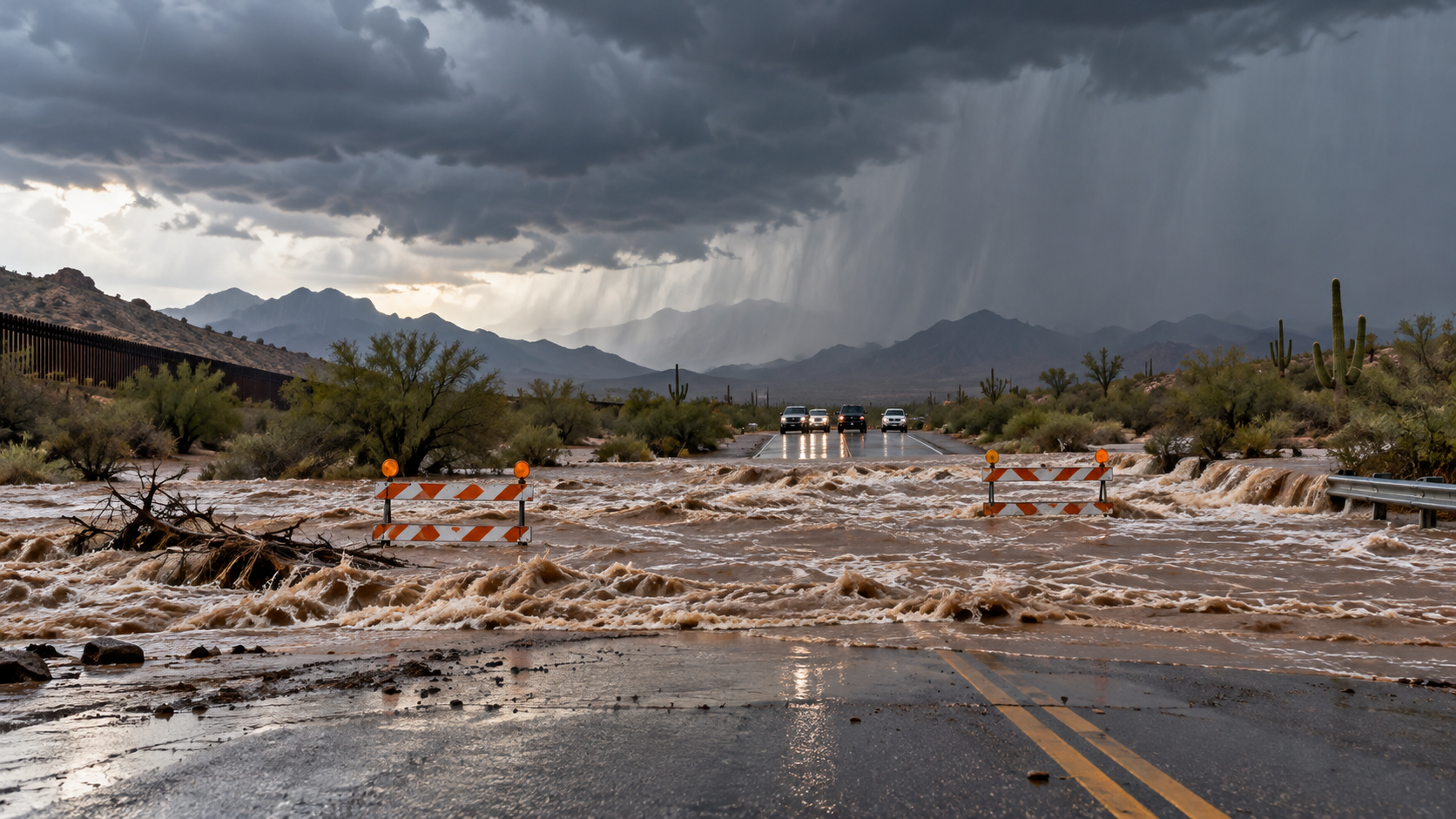
Drivers should avoid flooded roads and never cross moving water. Floodwater can conceal washouts, debris, open manholes, and damaged pavement. Drivers should not go around barricades. Local warnings are more reliable than conditions outside a person’s home because flooding can develop several miles away while nearby streets remain dry.
Was Southern California Spared the Worst Flooding?
Reports presented a mixed picture:
- Regional forecasts warned of a broad flood threat from Rachel’s remnants.
- Some Southern California areas avoided major flooding because tides remained below forecast levels.
- Damaging surf prompted an evacuation order for some Long Beach beachfront homes.
- Other reports described serious coastal flooding under exceptional conditions.
These statements are not necessarily contradictory. They may cover different places, times, or severity thresholds. Some areas avoided the worst forecast flooding, but coastal hazards remained serious and damaging surf prompted evacuations in parts of Long Beach.
Storm conditions can change as the track shifts, wind fields evolve, rainfall bands move, and waves interact with the coastline. Tide timing also matters. A tide that peaks earlier or remains lower than expected can reduce coastal flooding even when surf remains dangerous.
Residents should prioritize current alerts from local officials and weather agencies over broad regional summaries.
Safety Guidance for Residents and Visitors
During an Evacuation Order
Residents under an evacuation order should:
- Leave immediately according to official instructions.
- Use designated evacuation routes.
- Move inland or to higher ground when directed.
- Take medications, identification, essential documents, and phone chargers.
- Bring pets and necessary pet supplies.
- Avoid flooded roads and blocked routes.
- Do not return until officials confirm that it is safe.
Do not stop to watch waves, photograph flooding, or inspect damage during active conditions.
Near the Coast
Stay away from beaches, piers, jetties, seawalls, harbor entrances, unstable cliffs, and flooded coastal roads. Keep away from wave run-up and obey beach closures, barricades, and law-enforcement instructions.
Do not turn your back on the ocean during high surf. Waves can arrive in sets, and a calm period does not guarantee safety. Check local emergency alerts and National Weather Service updates. Check on vulnerable neighbors only when doing so does not create additional risk.
While Driving
Reduce speed, increase following distance, and use headlights when visibility is poor. Avoid roads covered by water, and turn around instead of driving through flooded areas. Never drive around barricades.
Watch for debris, downed power lines, damaged pavement, and flooded underpasses. Delay nonessential travel until transportation officials confirm that roads are open.
What Happens After Rachel Moves Away?
Hazards can persist after Rachel’s center or remnants move away. Continued risks may include:
- High surf
- Beach erosion
- Standing water
- Damaged roads
- Unstable structures
- Electrical hazards
- Mold and water damage
- Debris on public and private property
Beaches and coastal roads may remain closed while officials inspect seawalls, access points, cliffs, utilities, and buildings. Post-storm work may include clearing debris, checking drainage systems, inspecting roads and seawalls, assessing homes and public facilities, repairing utilities, and updating evacuation or closure notices.
Residents should document property damage only after authorities declare the area safe. They should then contact insurers, local agencies, and emergency assistance programs when applicable. Total damage estimates should wait for official assessments.
Key Takeaways
- Rachel’s remnants created a broad rainfall and flooding threat across the West Coast.
- High tides and powerful surf increased risks along Southern California’s coastline.
- Some areas avoided major flooding because tides stayed below forecast levels.
- Long Beach officials issued an evacuation order for some beachfront homes after damaging surf affected the coast.
- Coastal flooding, erosion, and dangerous waves remained possible where rainfall flooding was limited.
- Residents should follow evacuation orders, avoid flooded roads, and stay away from exposed coastal areas.
- Conditions varied by location, making local emergency alerts more reliable than broad regional summaries.
Frequently Asked Questions
How did Rachel affect Southern California?
Rachel’s remnants brought heavy rain, dangerous surf, high-tide concerns, and coastal flooding risks. Some areas reportedly avoided the worst forecast flooding, but damaging surf still affected exposed beachfront communities.
Did Rachel cause flooding in Long Beach?
Damaging surf battered the Long Beach coastline, and officials issued an evacuation order for some beachfront homes. The available reporting does not provide a complete damage assessment for the city.
Why were high tides dangerous during Rachel?
High tides left less room for stormwater and wave run-up to drain into the ocean. When high tides combine with heavy rain and strong surf, coastal roads, homes, drainage systems, and infrastructure face greater risks of flooding and erosion.
Was Southern California spared major flooding?
Some areas reportedly avoided major flooding because tides remained below forecast levels. However, the region was not unaffected. Evacuations, damaging surf, erosion, and localized flooding remained possible.
Should residents evacuate during a coastal storm?
Yes. Residents should evacuate whenever local officials issue an evacuation order. Follow designated routes, take essential medication and pets, and do not return until authorities confirm that conditions are safe.
Is it safe to visit Southern California beaches after Rachel?
Not necessarily. Beaches may remain dangerous because of high surf, unstable cliffs, debris, erosion, and damaged access points. Visitors should wait for official reopening notices and follow all posted closures.
Artikel Terkait
-
 Riyadh Airport Attack: 1 Dead, 11 Injured, What We Know
-
 North Korea Fires Multiple Ballistic Missiles
-
 At Least 139 Migrants Die Off Djibouti Coast
-
 Simon and Rachel Raise Flood Risks in Mexico and U.S.
-
 Trump Faces Backlash Over Reported Russian Diesel Plan
-
 Judge Orders Taxpayer-Funded Pro-Trump Ads Off Air