NASA’s Complex Campaign to Test Lunar Landers
NASA’s Complex Campaign to Test Lunar Landers
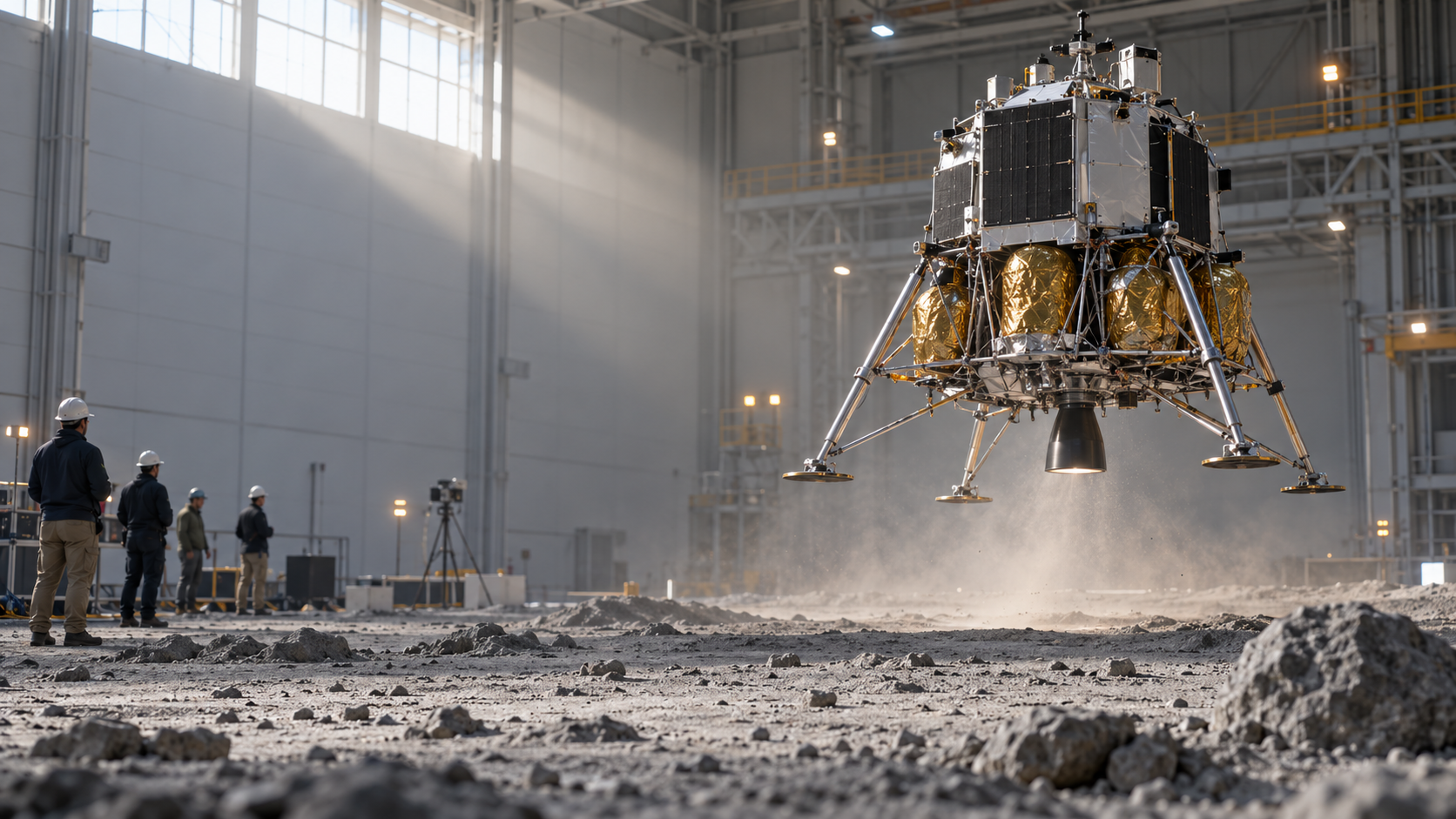
NASA is preparing an unusually complex campaign to test lunar landers as the Artemis program advances toward future crewed missions. The effort combines multiple spacecraft, commercial partners, launch opportunities, ground teams, mission software and safety reviews in one tightly coordinated program.
The central challenge is clear but demanding: NASA must maintain Artemis momentum while gathering enough evidence to show that its lunar-landing systems are safe and reliable.
CNN described the effort as an exceptionally complicated and rapid launch campaign focused on validating lunar-lander systems. NASA has also announced testing connected to the Artemis III lander, although the available announcement does not provide a complete test schedule or detailed results. Source 1
The campaign is not simply a sequence of launches. It is a program-wide test of whether landers, launch vehicles, spacecraft, communications networks and mission teams can operate together under lunar-mission conditions.
Why the Campaign Is So Complex
Multiple Lander Systems
NASA is not following one vehicle design or one test path. The Artemis architecture involves different systems, development teams and commercial partners, each with its own hardware, software and operating methods.
Parallel development can provide technical alternatives, encourage innovation and generate data more quickly. It also creates additional coordination work. Each lander may require separate reviews of its structure, propulsion, guidance, navigation, communications, power systems and landing operations.
Testing must answer two questions:
- Does the individual lander work as designed?
- Can it operate as part of the wider Artemis mission?
A vehicle can perform well in an isolated ground test and still encounter problems when connected to launch systems, orbital operations, communications networks or mission-control procedures. NASA therefore needs both vehicle-level tests and end-to-end integration work.
A Larger Artemis Architecture
A lunar lander must work with crew spacecraft, launch vehicles, orbital infrastructure, spacesuits, ground-control systems and surface equipment. These dependencies mean that a change to one system can affect others. A launch-vehicle change can alter the lander’s trajectory, while a software update can affect navigation or communications.
NASA must evaluate how each spacecraft fits into the full mission sequence, from launch through lunar orbit, descent, touchdown and surface operations.
A Compressed Schedule
A rapid campaign leaves less time between milestones. Engineers, manufacturers, launch-site personnel and mission managers must prepare hardware and review data on an accelerated timetable.
Key pressures include:
- Manufacturing and inspection deadlines
- Limited launch windows
- Shared facilities and specialized personnel
- Technical problems affecting multiple missions
- Less time to redesign hardware between demonstrations
Speed does not eliminate safety reviews. NASA must still analyze test data, investigate anomalies and authorize major mission steps. The challenge is maintaining momentum without allowing schedule targets to replace technical evidence.
What NASA Must Prove
Launch and Ascent
The lander must survive vibration, acceleration, acoustic loads and other forces generated during launch. Engineers need evidence that its structure, propulsion and fuel systems will perform as expected. Guidance and control systems must maintain the correct trajectory, and separation events must occur in the proper sequence.
Flight testing can reveal vibration, thermal behavior, software responses and system interactions that are difficult to reproduce completely on Earth.
Transit to the Moon
During the journey, the lander must provide dependable power, communications, thermal control, navigation and flight-software performance. It must generate and store enough electrical power, manage heat, communicate across long distances and receive commands reliably.
Autonomous functions are equally important. The spacecraft must monitor its condition, recognize faults and respond according to programmed procedures rather than relying on constant manual intervention.
Lunar Orbit and Descent
Lunar-orbit insertion and descent are among the mission’s most demanding phases. The lander must execute precise trajectory changes, manage its engines and navigate toward a designated landing area.
Because the Moon has no substantial atmosphere for conventional aerodynamic braking, the lander must use propulsion to control its descent. It must also contend with craters, slopes, rocks and changing lighting conditions.
Landing systems may combine preplanned maps with real-time data from onboard sensors. Hazard detection and terrain-relative navigation can help identify unsafe areas and adjust the flight path, but these functions must operate under time pressure and with limited opportunities for ground intervention.
Touchdown and Surface Operations
Landing is only one milestone. After touchdown, NASA must determine whether the vehicle is stable, powered and capable of supporting the next phase of the mission.
Post-landing checks may include:
- Vehicle stability
- Power availability
- Communications with Earth and lunar-orbit spacecraft
- Deployment of surface equipment
- Thermal performance
- Readiness for crew-support functions
A lander intended for astronauts must remain operational after touchdown and support communications, surface activities and emergency procedures.
The Artemis III Lander
Human-Rated Requirements
Artemis III is connected to NASA’s effort to validate a lunar lander for future crewed exploration. A vehicle intended to support astronauts faces requirements beyond those applied to a basic technology demonstration.
Human-rated systems must address crew safety, redundancy, emergency response, communications, life-support integration and abort planning. NASA must also understand how the lander behaves when systems do not perform exactly as expected.
The available material confirms NASA’s announcement about Artemis III lander testing but does not provide a complete vehicle-specific test plan or detailed results. Source 3
Announcing a test is not the same as completing it, reviewing the results or declaring a spacecraft ready for astronauts.
Why Uncrewed Tests Matter
Uncrewed demonstrations allow NASA to collect real flight data before placing astronauts at risk. They can reveal how engines, fuel systems, navigation software, communications equipment and thermal-control systems behave during an actual mission.
They can also expose interactions that component tests miss. A navigation system may perform well in a laboratory but respond differently when affected by vibration, communications delays or unexpected sensor data.
Results may lead to design changes, additional demonstrations or schedule adjustments. A problem discovered before a crewed mission is more manageable than the same problem during a lunar descent with astronauts aboard.
From Testing to Approval
A typical development path includes:
- Test planning and requirements definition
- Hardware preparation and inspection
- Launch or ground-test execution
- Data collection
- Engineering analysis
- Safety assessment
- Mission authorization
Each stage can raise new questions. Engineers may need to repeat a test, modify software, inspect hardware or revise operating procedures. Progress should therefore be measured by completed tests, published findings and resolved risks, not only by announcements.
The Operational Challenge
A complex campaign requires coordination among NASA, commercial partners, launch-site personnel, manufacturers, tracking networks, communications teams and contingency staff. A launch is not complete when the vehicle leaves the pad; teams must monitor spacecraft health, receive data, respond to anomalies and manage the next mission phase.
Parallel testing can accelerate learning and reduce reliance on one development path. It can also create competition for specialists, facilities, launch infrastructure and review boards. An issue in one test may affect other vehicles, mission plans and safety decisions.
Weather, range restrictions, vehicle readiness and tracking-network availability can also affect launch attempts. Lunar missions require carefully selected opportunities because the spacecraft must reach the Moon along a suitable trajectory. The supplied sources do not identify a specific weather delay in this campaign.
Commercial Spaceflight and NASA Oversight
Commercial partnerships give NASA access to multiple companies, engineering approaches and industrial capabilities. Different providers can develop distinct solutions for propulsion, navigation, landing operations and spacecraft architecture.
Each design also has its own risk profile. NASA must evaluate propulsion, fuel management, guidance, navigation, flight software, structures, communications, thermal control and surface operations for every system.
Commercial participation does not remove NASA’s responsibility for safety. The agency must establish requirements, monitor progress, review evidence and decide whether risks have been reduced sufficiently for each mission. Transparent test results, clear schedules and documented safety reviews remain essential.
What Could Go Wrong?
Hardware failures, software defects, propulsion anomalies, manufacturing delays and incomplete data can all affect the schedule. A failed test is not automatically wasted if engineers identify the cause, correct the problem and verify the fix.
Integration problems can be especially serious. Communications incompatibility, timing conflicts, navigation-data errors, software-interface failures and power or thermal conflicts may appear only when individually tested systems operate together. End-to-end testing helps expose these issues.
Schedule and budget pressure can also force difficult choices between meeting a public milestone, conducting another test, redesigning hardware or extending the schedule. When test data reveals unresolved risks, crew safety must take priority.
Why the Campaign Matters
The lander campaign supports more than one planned lunar landing. NASA aims to develop repeatable transportation capabilities for crew missions, cargo delivery, scientific work and future surface infrastructure.
Early tests can establish procedures for landing, communications, navigation, surface operations and emergency response. They can also show whether commercial landers meet demanding government and human-spaceflight requirements, influencing future procurement and mission planning.
Reliable landers are essential to sustained lunar activity, including scientific expeditions, technology demonstrations, resource investigations and preparation for more distant exploration. Those ambitions depend on capabilities that have been tested and verified.
How to Interpret NASA’s Announcements
Readers should distinguish among development, testing, demonstration, certification and operational readiness. A development announcement describes planned or ongoing work. A completed test confirms that an activity occurred. Certification and operational readiness require broader reviews and supporting evidence.
The most useful indicators are completed tests, published results, safety assessments, confirmed milestones and updated schedules. A planned test shows intent; a completed test with analyzed data provides evidence.
A delay does not automatically indicate failure. It may reflect additional safety work, hardware redesign, new test requirements, data analysis or launch-site constraints. The key question is whether the response improves mission reliability.
Conclusion
NASA’s lunar-lander campaign is complicated because it combines multiple vehicles, commercial partners, launch opportunities, mission systems and safety reviews. The agency must coordinate them while preparing for future Artemis missions.
The core challenge is balance: NASA must move quickly enough to maintain progress while giving engineers time to analyze data, correct problems and verify improvements.
Success should be measured by demonstrated performance, reliable integration and resolved risks—not by the number of announcements or the speed of the launch sequence. Turning lunar landers from prototypes into dependable transportation systems requires evidence that they can operate safely throughout the mission and support increasingly ambitious lunar exploration.
Frequently Asked Questions
Why is NASA’s lunar-lander campaign so complicated?
NASA must coordinate multiple lander systems, commercial partners, launch vehicles, ground teams, mission software and safety reviews. Each lander must also operate within the wider Artemis architecture.
What is NASA testing?
Testing can cover launch performance, propulsion, navigation, communications, power, thermal control, autonomous landing, surface stability and integration with other Artemis systems. The supplied sources do not provide a complete vehicle-specific test list.
How does Artemis III relate to the campaign?
Artemis III is connected to NASA’s effort to validate a lunar lander for future crewed exploration. NASA has announced related testing, but the supplied material does not provide detailed results or a complete schedule. Source 3
Why are uncrewed tests important?
They allow NASA to measure real spacecraft performance and identify problems before astronauts fly. Results can lead to design changes, additional tests or schedule updates.
Can weather delay a launch?
Yes. Weather and other launch-site conditions can prevent a launch even when the spacecraft is technically ready. The supplied sources do not identify a specific weather delay for this campaign.
What would count as success?
Success would involve completing planned tests, collecting reliable performance data, resolving anomalies, demonstrating compatibility with Artemis systems and receiving the safety approvals required for future crewed missions.