G2 Geomagnetic Storm Forecast for October 11, 2026
G2 Geomagnetic Storm Forecast for October 11, 2026
A G2 geomagnetic storm may affect Earth on October 11, 2026, according to a forecast attributed to NOAA’s Space Weather Prediction Center (SWPC). G2 is classified as a moderate storm on NOAA’s five-level scale. It can produce brighter, more widespread auroras and limited effects on satellites, high-frequency radio, navigation systems, and high-latitude power infrastructure.
The forecast remains subject to change. Space-weather conditions depend on the timing, speed, density, and magnetic orientation of solar-wind disturbances as they reach Earth. Cloud cover, darkness, light pollution, and local viewing conditions will determine whether people can see the northern lights.
Reports also described possible G2-level activity on October 9 and October 10, suggesting a period of elevated geomagnetic activity rather than one isolated event.
What Is a G2 Geomagnetic Storm?
How geomagnetic storms form
Geomagnetic storms occur when disturbances from the Sun interact with Earth’s magnetosphere, the region controlled by Earth’s magnetic field. Major sources include:
- Coronal mass ejections (CMEs): Large clouds of magnetized plasma expelled from the Sun.
- High-speed solar-wind streams: Fast solar-wind flows from coronal holes, which are regions of reduced magnetic activity on the Sun.
A CME directed toward Earth can carry billions of tons of charged particles. When it arrives, its magnetic field interacts with the magnetosphere. Storm intensity depends on the disturbance’s speed, density, arrival time, and magnetic-field orientation.
The north-south direction of the incoming magnetic field is especially important. A southward-pointing field can connect more efficiently with Earth’s magnetic field, allowing more energy to enter the magnetosphere and strengthening the storm.
What the G-scale means
NOAA’s geomagnetic storm scale has five levels:
| Level | Classification |
|---|---|
| G1 | Minor |
| G2 | Moderate |
| G3 | Strong |
| G4 | Severe |
| G5 | Extreme |
A G2 storm can affect some space and communication systems, but it does not normally indicate a widespread public emergency.
A forecast storm level is not the same as an observed storm level. Forecasts are based on solar observations and models. Instruments measure the actual solar-wind and geomagnetic response after the disturbance reaches Earth. NOAA may upgrade, downgrade, extend, or cancel a forecast as new data becomes available.
Typical effects of a G2 storm
Possible effects include:
- Voltage corrections in high-latitude power systems.
- Increased atmospheric drag on low-Earth-orbit satellites.
- Tracking or orientation challenges for some spacecraft.
- Intermittent high-frequency radio problems at higher latitudes.
- Temporary fluctuations in satellite-navigation performance.
- Expanded aurora visibility.
A G2 forecast does not mean that ordinary internet, mobile-phone, household electricity, or GPS services will necessarily fail.
NOAA Forecast for October 11, 2026
The supplied report attributes the October 11 forecast to NOAA’s Space Weather Prediction Center and describes likely moderate, or G2, geomagnetic storm conditions. Source 1
The available summary does not provide a precise peak time, CME speed, expected planetary K-index value, or specific geographic boundary for aurora visibility. Those details may change as NOAA receives additional solar-wind observations.
For live information, consult NOAA’s official space-weather products, including three-day geomagnetic forecasts, storm watches and warnings, real-time solar-wind measurements, planetary K-index data, and aurora forecasts.
How the October 9–11 forecasts fit together
A separate report described a G2-level storm forecast for October 9 as a CME approached Earth. Source 5
Another report stated that NOAA expected a moderate G2 storm on October 10, with the alert published at 16:05 UTC. Source 7
Together, these reports suggest elevated geomagnetic activity between October 9 and October 11. They do not prove that three identical G2 storms will occur. Activity can continue for many hours after a CME arrives, and additional eruptions or interacting solar-wind structures can prolong or intensify the event.
The exact peak time for October 11 will require an updated forecast closer to the date.
Could the Northern Lights Be Visible?
Auroras occur when energized particles enter the upper atmosphere and collide with gases such as oxygen and nitrogen. During stronger geomagnetic activity, the auroral oval expands toward lower latitudes.
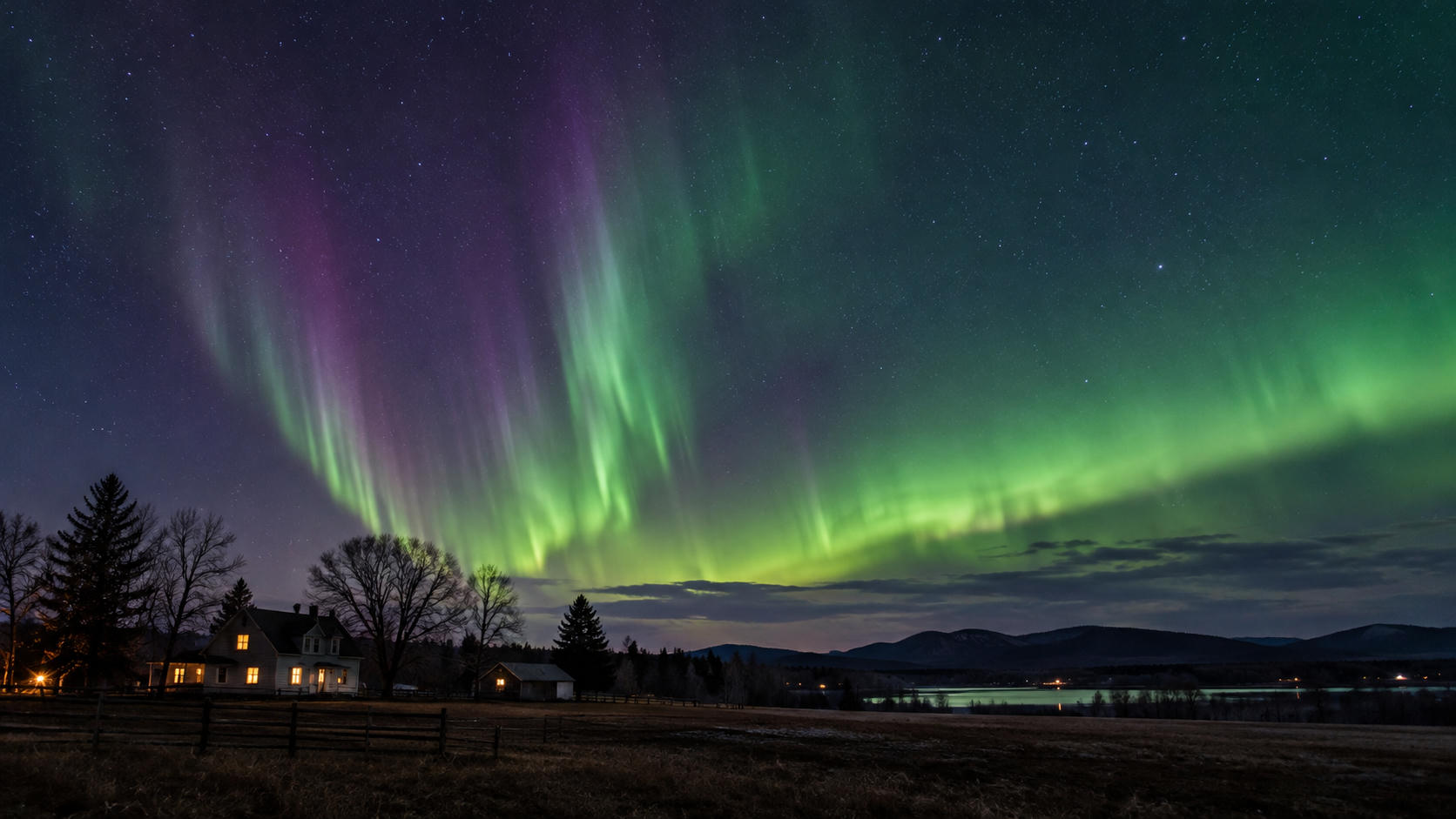
The northern lights on October 11, 2026, may be visible in parts of the northern United States, Canada, northern Europe, and other mid-to-high-latitude regions. The exact viewing area will depend on the storm’s actual strength and timing.
Three conditions must align:
- Geomagnetic activity must reach the observer’s latitude.
- The sky must be dark and sufficiently clear.
- The observer must have an unobstructed view away from artificial light.
Forbes reported that the northern lights could be visible across 28 U.S. states after recent strong displays. Source 3
That report does not guarantee visibility in every listed state, city, or county on October 11. Source 9
Possible visibility means the auroral oval may reach a location. Favorable viewing also requires dark, clear skies and low light pollution. Confirmed visibility means that instruments or observers detect auroras at that time.
Best viewing conditions
Choose a location with a clear northern horizon, minimal artificial light, open surroundings, safe access, and reliable weather conditions. Rural areas, dark-sky parks, elevated viewpoints, and open fields usually offer better conditions than city centers.
Auroras are most visible during local nighttime hours. Activity may increase near local midnight, but displays can occur earlier or later. Check updates throughout the night because cloud cover, fog, moonlight, and horizon conditions can determine whether a display is visible.
Smartphone cameras may record colors that appear faint to the naked eye because cameras can collect light over longer exposures.
How to Watch the Northern Lights
Before leaving home, check:
- NOAA geomagnetic storm watches and warnings.
- Real-time auroral activity and solar-wind conditions.
- Cloud cover, precipitation, fog, and visibility.
- Temperature and road conditions.
Use a light-pollution map to find darker areas. Follow park hours and access rules. Do not stop on roadsides, trespass on private property, or use unstable elevated locations. Download maps before traveling to remote areas, where phone coverage may be limited.
Allow 20 to 30 minutes for dark adaptation. Reduce screen brightness and use a red-light mode or dim flashlight. From lower latitudes, face north and continue watching because auroral bursts can be brief.
For photography, use night mode or manual exposure, a stable tripod, a wide-angle lens, a delayed shutter, and spare power for cold conditions. Avoid bright screens, headlights, and flash photography.
Potential Effects on Technology and Infrastructure
Power grids
Geomagnetic storms can create geomagnetically induced currents in long conductors, including power-transmission networks. Higher-latitude systems are generally more exposed. Grid operators monitor space weather and can take protective measures. A G2 forecast does not mean widespread blackouts are expected.
Satellites and spacecraft
Geomagnetic activity can heat and expand the upper atmosphere, increasing drag on low-Earth-orbit satellites. Operators may adjust tracking, orientation, or mission procedures. Most people will not directly notice these effects.
Radio, GPS, and communications
Disturbed ionospheric conditions can affect some high-frequency radio communications, particularly at higher latitudes. Satellite-navigation accuracy or reliability may also fluctuate. Ordinary internet and mobile-service interruptions are not guaranteed during a G2 event.
Aviation, maritime operations, emergency communications, and satellite services may monitor space weather during stronger events. Follow official warnings rather than social-media claims.
What to Do Before the Forecast Storm
Prepare for aurora viewing by identifying a dark location, checking the weather shortly before departure, and bringing:
- Warm clothing.
- Water and snacks.
- A charged phone.
- A flashlight with a red-light setting.
- A tripod for photography.
- Maps or offline directions.
Tell someone where you are going when traveling to a remote area. Keep essential devices charged and avoid relying on a single communication method where coverage is weak.
A G2 storm is moderate. Most people can continue normal activities. The main public interest is likely to be expanded aurora visibility rather than a widespread ground-level emergency.
How to Follow Updates on October 11
Monitor NOAA’s Space Weather Prediction Center, official watches and warnings, local weather services, regional emergency-management agencies, and reputable astronomy or aurora-monitoring services.
Important data points include solar-wind speed and density, interplanetary magnetic-field strength and orientation, planetary K-index readings, updated CME arrival estimates, and local cloud conditions.
A watch means conditions may develop. A warning indicates that storm conditions are expected or occurring. An alert reports detected conditions or a relevant threshold. Always check the publication time because forecasts can change quickly.
Key Takeaways
- NOAA is reported to expect possible G2 geomagnetic storm conditions on October 11, 2026.
- Related forecasts describe elevated activity around October 9 and October 10.
- The event could improve the chance of seeing auroras at lower latitudes than usual.
- Visibility depends on storm timing, darkness, cloud cover, light pollution, and location.
- A G2 storm can affect some power, satellite, radio, and navigation systems.
- Widespread disruption is not automatically expected.
- NOAA updates and local weather forecasts provide the most useful guidance.
Frequently Asked Questions
What is a G2 geomagnetic storm?
A G2 geomagnetic storm is a moderate disturbance in Earth’s magnetic field on NOAA’s five-level scale. It can produce auroras at lower latitudes and limited effects on satellites, high-frequency radio, power systems, and navigation services.
When is the storm expected?
The forecast identifies October 11, 2026, as a likely date for G2 conditions. Related reports describe activity on October 9 and October 10. The exact peak time may change as new CME and solar-wind data becomes available.
Will the northern lights be visible?
They may be visible in parts of the northern United States and other mid-to-high-latitude regions if activity reaches the forecast level. Visibility is not guaranteed because darkness, cloud cover, light pollution, location, and storm strength all matter.
How far south could the aurora be seen?
A G2 storm can expand the auroral oval toward lower latitudes, but the viewing boundary varies. Check an updated aurora forecast instead of relying on a fixed state or city list.
Is a G2 storm dangerous to people on the ground?
A G2 storm is generally not considered a direct health danger to people on the ground. Its main potential effects involve satellites, radio communications, navigation, spacecraft, and high-latitude power infrastructure.
Where can I get reliable updates?
Use NOAA’s Space Weather Prediction Center for official watches, warnings, alerts, and forecasts. Check local weather services for cloud cover and visibility, and use reputable aurora-monitoring services for location-specific guidance.
Artikel Terkait
-
 How De-Extinction Research Could Extend Human Life
-
 NASA Images Reveal Rugged Crags at Sunrise on Mars
-
 Supernova 1181: Pa 30 Revealed in High Definition
-
 Four Astronauts Reportedly Return After Eight Months
-
 Northern Lights May Be Visible Across the U.S. This Weekend
-
 Francis Halzen and the Search for Cosmic Neutrinos