Congo Ebola Outbreak Reportedly Reaches Eighth Province
Congo Ebola Outbreak Reportedly Reaches Eighth Province
Last updated: October 18, 2026
Verification note: The report that the outbreak has reached an eighth province should be checked against current releases from the Democratic Republic of Congo’s health authorities, the World Health Organization, and Africa Centres for Disease Control and Prevention before publication.
A fast-moving Ebola outbreak in the Democratic Republic of Congo has reportedly reached an eighth province, according to reports attributed to the Associated Press, the South China Morning Post, and the Toronto Star. The development suggests that outbreak-related cases or transmission have been identified across a wider area than previously reported.
The available source summaries do not provide a verified case count, death toll, list of affected provinces, or detailed response figures. Unrelated entries containing figures such as “500+” or “100+” are not evidence and should not be used.
What the Eighth-Province Report Means
The phrase “eighth province” describes the reported geographic reach of the outbreak. It does not establish the number of cases, deaths, transmission chains, or affected communities.
Public-health authorities distinguish among several categories:
- Confirmed cases: Infections established through laboratory testing.
- Suspected cases: People whose symptoms or exposure histories require investigation.
- Probable cases: People who meet an epidemiological or clinical definition but may not yet have laboratory confirmation.
- Contacts under monitoring: People who may have been exposed and are being followed for symptoms.
- Ebola-related deaths: Fatalities classified as Ebola-related after clinical, laboratory, or epidemiological review.
These categories should not be combined. Case counts and affected locations can change as investigations confirm or reclassify cases.
A rapidly expanding outbreak may involve new cases in several locations, transmission chains that grow before contacts are identified, or increased detection and reporting. Investigators must determine how each case became infected through interviews, contact tracing, laboratory testing, hospital records, burial investigations, and, where available, genomic analysis.
Why Wider Geographic Spread Matters
An outbreak spanning more provinces places greater pressure on health authorities and response partners. The response may require additional:
- Surveillance teams.
- Laboratory capacity.
- Sample-transport systems.
- Treatment beds and isolation space.
- Personal protective equipment.
- Infection-prevention specialists.
- Community health workers.
- Vaccination teams, where officially recommended.
Remote communities may be difficult to reach because of poor roads, insecurity, limited electricity, weak telecommunications, and long travel times. A larger geographic footprint can also distribute resources unevenly, leaving one area in need of urgent investigation while another requires continued follow-up or health education.
Contact Tracing
Contact tracing identifies people who may have been exposed and monitors them for symptoms. It becomes more difficult when patients travel before diagnosis, families cross provincial borders, or contacts cannot be located.
Patients may not remember every exposure, particularly when illness progresses quickly. Families may also hesitate to disclose contacts because of stigma, fear, or distrust. Effective tracing requires trained workers, reliable transport, secure data systems, privacy protections, and coordination among provincial teams.
Pressure on Routine Healthcare
An Ebola response can affect ordinary healthcare. Facilities may redirect staff and supplies toward outbreak control, while patients delay care because they fear infection or encounter restricted services. Potential effects include reduced access to maternal and child healthcare, delayed treatment for malaria and tuberculosis, shortages of trained workers, disrupted routine vaccination, and weaker surveillance for other diseases.
Maintaining essential healthcare is part of outbreak control. Communities need safe access to routine medical services while specialized teams investigate and treat Ebola cases.
How Ebola Spreads
Ebola spreads mainly through direct contact with the blood or bodily fluids of an infected person, particularly after symptoms develop. Potentially infectious fluids include blood, vomit, diarrhea, urine, saliva, sweat, breast milk, and semen.
Family caregivers and healthcare workers may face elevated risk when they have close contact with an ill person without appropriate protection. Exposure can occur while cleaning bodily fluids, changing clothing or bedding, bathing or feeding a sick relative, handling contaminated objects, providing medical care without adequate infection prevention, or reusing equipment.
The bodies of people who die from Ebola can remain infectious. Washing, touching, or having close contact with a body during traditional burial practices can create serious exposure risks. Safe and dignified burial teams use protective procedures while working with families and community leaders.
Ebola is not typically spread through casual contact in the same way as common respiratory infections. However, close contact with bodily fluids can create serious risk, especially during severe illness or after death. People should not stigmatize patients, survivors, families, or healthcare workers.
Symptoms and Medical Care
Early symptoms may include:
- Fever.
- Severe headache.
- Muscle pain.
- Weakness and fatigue.
- Sore throat.
Later or severe symptoms may include vomiting, diarrhea, abdominal pain, rash, unexplained bleeding or bruising, dehydration, and organ complications. These symptoms overlap with malaria, influenza, typhoid fever, and other illnesses. Symptoms alone cannot confirm Ebola; professional assessment and laboratory testing are required.
Anyone who develops symptoms after possible exposure should contact local health authorities, an Ebola response team, or a designated treatment service. While awaiting medical guidance, people should:
- Avoid close physical contact.
- Avoid handling bodily fluids, clothing, bedding, or human remains.
- Tell health workers about recent travel and possible contacts.
- Follow instructions about transport and testing.
- Avoid crowded public transport if response services provide another option.
People should not attempt to diagnose or treat suspected Ebola at home.
Public-Health Response
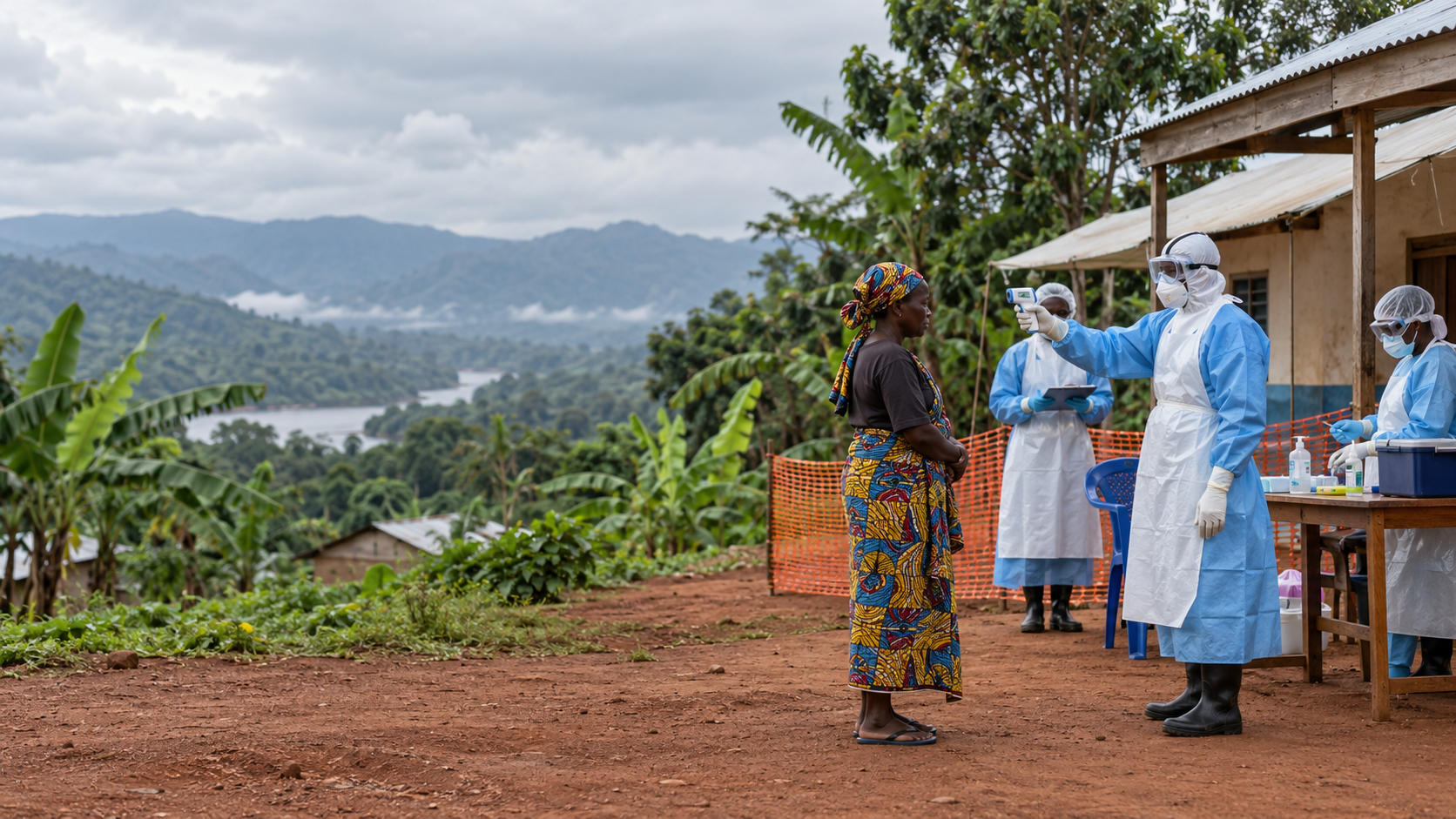
Response teams investigate suspected cases, collect samples safely, and send them to laboratories for confirmation. Rapid testing helps authorities isolate patients, begin care, identify contacts, and map transmission chains. Delays may result from limited laboratory capacity, difficult transport routes, equipment shortages, or insecurity.
Suspected and confirmed patients may be managed in dedicated treatment units. Care can include fluid and electrolyte management, monitoring vital signs, treating complications, managing organ damage, providing nutrition, and preventing further infection. Early supportive care can improve outcomes.
Ring vaccination may focus on confirmed-case contacts, contacts of contacts, healthcare workers, and other frontline workers. The vaccine, eligibility criteria, timing, and availability depend on official outbreak guidance. No vaccination campaign should be assumed to be active without confirmation from public-health authorities. Vaccination does not replace testing, isolation, contact tracing, safe care, or community engagement.
Core infection-prevention measures include hand hygiene, correct use of personal protective equipment, safe injection practices, environmental cleaning, triage and separation of suspected patients, safe waste disposal, proper handling of linens and equipment, and staff training and supervision.
Barriers to Control
Large distances, poor roads, limited electricity, weak internet access, and inadequate health facilities can delay detection, sample transport, referral, and treatment. Insecurity may prevent health workers from reaching communities, interrupt contact tracing, delay vaccination, and limit treatment access.
Misinformation and distrust may lead people to hide symptoms, avoid treatment centers, reject vaccination, resist safe burials, or distrust response teams. These reactions can reflect fear, previous experiences, unclear communication, or legitimate concerns about healthcare access. Public-health messaging should involve trusted local leaders, health workers, religious leaders, community organizations, and survivors.
Movement between provinces can complicate exposure investigations and contact monitoring. Travel does not automatically mean that transmission occurred. Proportionate measures may include collecting travel histories, following contacts across administrative boundaries, sharing information between provincial authorities, and providing clear health messages.
Regional Implications
The eighth-province report indicates a wider domestic public-health challenge, but it does not establish the outbreak’s future trajectory or prove international spread. Further transmission depends on the number and location of contacts, the speed of case detection, healthcare access, population movement, and community cooperation.
Regional preparedness may include cross-border information sharing, training for frontline workers, referral-hospital preparedness, laboratory coordination, surveillance, and clear public information. The report does not, by itself, establish an international public-health emergency. Such a designation requires a formal assessment by the appropriate authorities.
Reliable Sources
Readers should prioritize updates from:
- The World Health Organization.
- The Africa Centres for Disease Control and Prevention.
- The Democratic Republic of Congo Ministry of Health.
- Provincial health authorities.
- Established news organizations with named sources.
Check the publication date, update time, named sources, case classification, affected locations, and whether later reports have revised the figures. Avoid relying on undated social-media posts, anonymous claims, unrelated snippets, or search results that do not link to the original report.
Conclusion
Reports attributed to the Associated Press, South China Morning Post, and Toronto Star indicate that the Congo Ebola outbreak has reportedly reached an eighth province. The development increases demands on surveillance teams, laboratories, treatment facilities, contact tracers, healthcare workers, and community leaders.
The geographic expansion does not provide a confirmed case count or predict how the outbreak will develop. Current official data and verified field investigations are required. The response depends on rapid case detection, laboratory testing, safe treatment, contact monitoring, infection prevention, vaccination where recommended, dignified burials, and public trust.
Final update: October 18, 2026. The eighth-province report and all outbreak figures should be rechecked against official releases before publication or republication.
FAQ
What does it mean that Ebola has reached an eighth province?
It means that outbreak-related cases or transmission have reportedly been identified across eight provinces of the Democratic Republic of Congo. It does not establish the total number of cases, deaths, or transmission chains.
How does Ebola spread?
Ebola spreads mainly through direct contact with the blood or bodily fluids of an infected person, especially after symptoms begin. Exposure can also occur through contaminated materials or unsafe handling of human remains.
What are the symptoms of Ebola?
Early symptoms can include fever, severe headache, muscle pain, weakness, fatigue, and sore throat. Later symptoms may include vomiting, diarrhea, abdominal pain, rash, bleeding, and organ complications. Laboratory testing is necessary to confirm infection.
What should someone do after possible exposure?
Contact local health authorities or an Ebola treatment service, monitor for symptoms, and avoid close physical contact until receiving medical guidance. Do not handle bodily fluids, contaminated materials, or human remains without proper protection and instructions.
How are Ebola outbreaks controlled?
Control measures can include case detection, laboratory testing, isolation and treatment, contact tracing, vaccination where recommended, infection prevention, safe burials, and clear communication with affected communities.
Is the outbreak an international emergency?
The report that the outbreak has reached an eighth province does not, by itself, establish an international emergency. That designation requires a formal assessment by the appropriate public-health authorities.
Artikel Terkait
-
 91-Year-Old Faces Rabies Costs After Raccoon Attack
-
 Do Everyday Foods Cause “Silent Brain Damage”?
-
 Three Brain Pathways Linked to Lasting Depression Relief
-
 Can Eating Blueberries Every Day Improve Your Mood?
-
 Experts Call for Clearer Federal Measles Guidance
-
 DRC Ebola Outbreak Reaches an Eighth Province