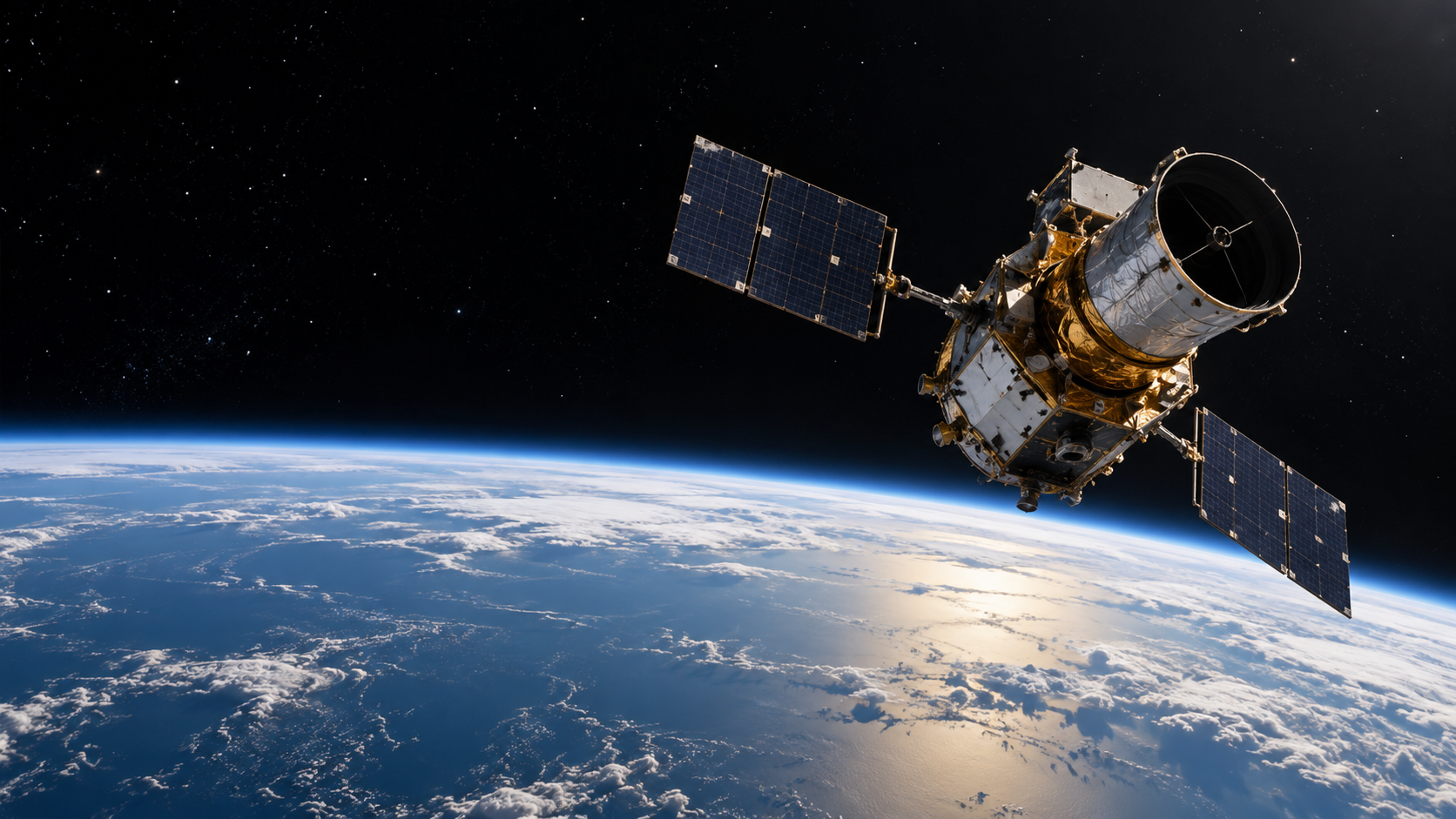
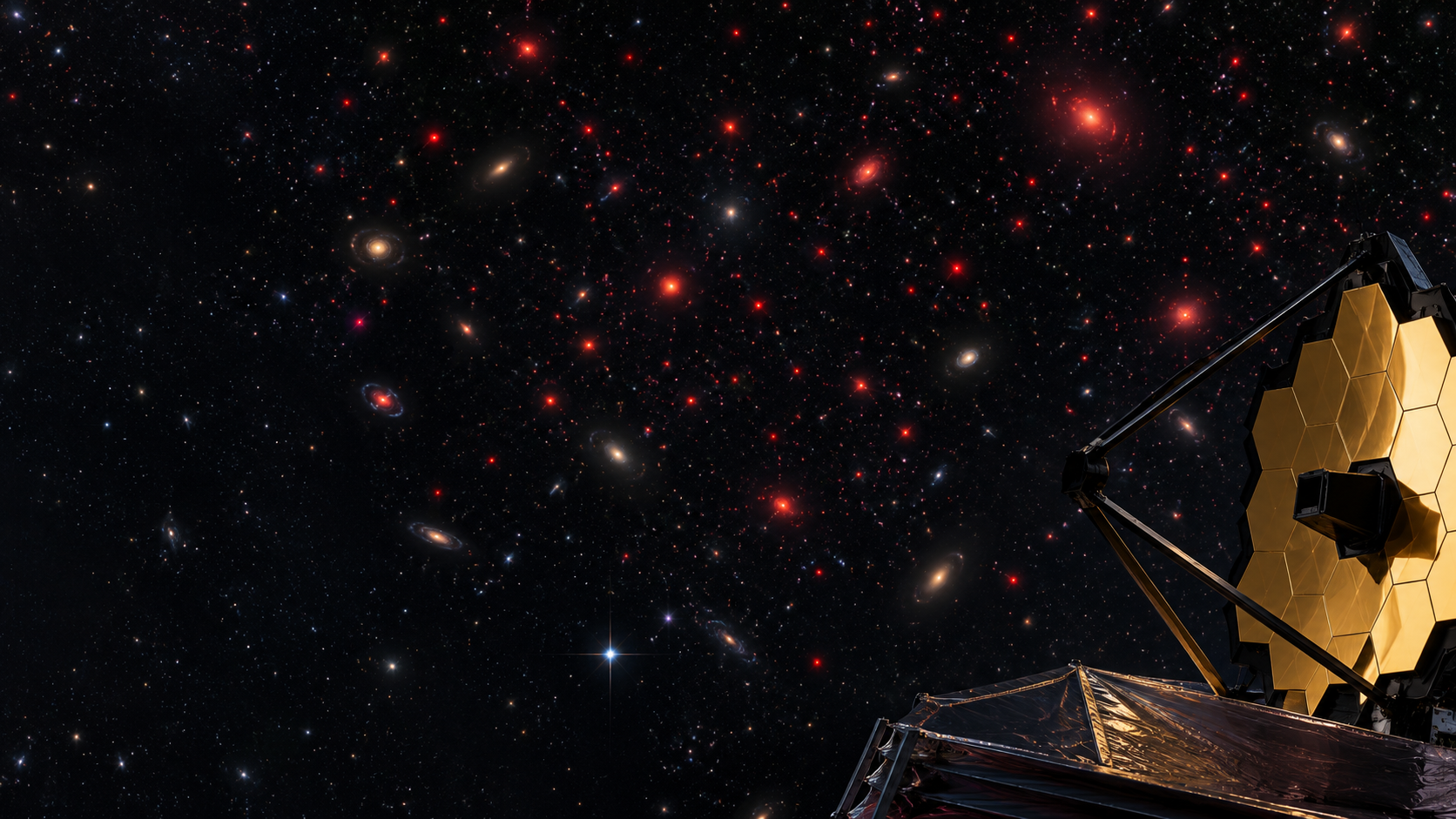
Clouds on a Lava Planet Challenge Astronomers
Clouds on a Lava Planet Challenge Astronomers
A lava planet should be one of the least likely places to find clouds. Its dayside may be hot enough to melt rock, while intense stellar radiation can evaporate volatile compounds and erode its atmosphere. Yet astronomers have reported evidence of clouds or a reflective atmospheric layer around a scorching rocky exoplanet.
The observation challenges a simple assumption: extreme heat does not necessarily eliminate atmospheric weather. The planet may have a layered, dynamic atmosphere in which material evaporates, travels through powerful winds, and condenses at higher altitudes or in cooler regions.
The James Webb Space Telescope (JWST) detected a giant, sunscreen-like feature around the planet. The feature may reflect, absorb, or scatter incoming stellar radiation Source 5. A separate report described the detection of clouds on a lava planet as a result that conflicts with expectations about intensely irradiated exoplanets Source 1.
The finding does not mean the planet is habitable. It shows that lava-planet atmospheres may be more complex than simplified climate models suggest.
What Is a Lava Planet?
“Lava planet” is a descriptive term for a rocky exoplanet that orbits so close to its star that part of its surface may be molten. It is not a formal planetary classification such as “gas giant” or “terrestrial planet.”
A close orbit exposes the planet to extraordinary stellar radiation. The dayside may become hot enough to vaporize surface minerals, while the nightside can be substantially cooler. If the planet is tidally locked, the same hemisphere always faces the star, creating a permanent hot side and a permanent dark side.
This arrangement creates sharp atmospheric contrasts. The dayside receives continuous energy, while the nightside loses heat to space. Between them lies the terminator, where temperature and chemistry can differ markedly from conditions on either hemisphere.
A lava planet therefore does not have one uniform climate. Its surface, lower atmosphere, upper atmosphere, dayside, nightside, and terminator may all behave differently.
Why Clouds Were Unexpected
Clouds form when a substance changes phase and condenses into particles or droplets. On Earth, water vapor becomes liquid droplets or ice crystals. On a lava planet, water may be absent, remain vaporized, or break apart under intense radiation.
Extreme heat can also vaporize surface minerals. Silicate and metal-bearing materials may enter the atmosphere above the hottest regions. Strong radiation can alter their chemistry or drive atmospheric loss.
These conditions led astronomers to expect familiar clouds to be difficult to form. If atmospheric material remains gaseous across a broad region, condensation cannot occur. If radiation strips the atmosphere, too little material may remain to produce a visible cloud layer.
Temperature alone, however, does not determine cloud formation. Pressure, composition, altitude, temperature gradients, and atmospheric circulation also matter. A substance that remains gaseous near the surface may condense higher in the atmosphere, on the cooler nightside, or near the terminator.
What JWST Detected
JWST studies distant exoplanets by measuring changes in starlight. It does not photograph clouds directly. Instead, it analyzes how a planet alters its star’s light during transits, eclipses, and different orbital phases.
The reported observation concerns a scorching lava planet with a giant, sunscreen-like feature. The feature is interpreted as a possible atmospheric layer that interacts with intense stellar radiation and may shield lower atmospheric levels or the surface from some of that energy Source 5.
The observation does not establish the layer’s chemical composition. Current summaries support the presence of a reflective or radiation-interacting feature, but they do not confirm whether it consists of silicates, metallic compounds, photochemical haze, or another material.
Why the Planet Appears Bright
A planet can appear unusually bright for several reasons. It may reflect starlight from its surface or atmosphere, scatter incoming light through high-altitude particles, or return radiation to space through clouds. Thermal emission may also contribute, especially at infrared wavelengths.
“Shiny” describes an observational property. It does not prove that the planet has an ocean, ice, a metallic surface, or a smooth reflective crust.
Astronomers must distinguish among:
- Reflected starlight: Radiation from the star redirected toward Earth.
- Thermal emission: Infrared energy released by the planet’s hot surface and atmosphere.
- Cloud scattering: Light redirected by particles or condensed material.
- Gas absorption and emission: Wavelength-specific effects caused by atmospheric molecules.
A bright signal alone cannot identify the responsible material. Spectroscopy across multiple wavelengths is needed to distinguish among possible explanations.
How Clouds Could Form
The discovery suggests that extreme surface heat does not prevent all forms of condensation. A planet may be unbearably hot near its substellar point while still having cooler atmospheric regions where particles form.
Potential cloud-forming locations include:
- The upper atmosphere, where pressure and temperature differ from surface conditions.
- The terminator, where permanent day meets permanent night.
- The nightside, which receives little or no direct stellar heating.
- Intermediate atmospheric layers with suitable temperature and pressure.
- Regions carried between hot and cool zones by powerful winds.
A possible circulation cycle could work as follows:
- Surface minerals or atmospheric compounds evaporate on the hottest dayside.
- Winds carry the vapor toward cooler altitudes or regions.
- The material condenses into particles, droplets, or mineral clouds.
- Circulation transports some of the material back toward the hot dayside.
- The particles evaporate again, continuing the cycle.
This remains a possible explanation rather than a confirmed description of the planet. It demonstrates why three-dimensional circulation matters: atmospheric material does not necessarily remain above the region where it formed.
What the Clouds Might Contain
Exoplanet clouds do not need to contain water. On a world far hotter than Earth, they could consist of high-temperature condensates, including:
- Silicate particles.
- Metal-bearing compounds.
- Mineral vapors that condense at lower temperatures.
- Aerosols created by radiation-driven chemistry.
- Complex mixtures of vapor and solid particles.
The exact composition remains unknown. Assigning a specific mineral would require stronger spectroscopic evidence or detailed modeling.
Mineral clouds could still have a major optical effect. Small particles can scatter visible and infrared radiation, changing the planet’s apparent brightness and the amount of energy absorbed by the atmosphere.
How Astronomers Study the Atmosphere
During a transit, an exoplanet passes in front of its star. A small fraction of starlight filters through the atmosphere before reaching the telescope. Gases and particles can absorb or scatter particular wavelengths, leaving measurable patterns in the star’s light.
Transit spectroscopy can reveal gases, high-altitude haze, and cloud layers that mute or flatten spectral features. During a secondary eclipse, the planet passes behind its star. Comparing the system’s light before and during the eclipse can reveal the planet’s contribution through reflected starlight and thermal emission.
These techniques do not produce direct images of clouds. They provide indirect evidence from changes in brightness and wavelength-dependent signals.
Astronomers compare observations across wavelengths to determine whether a signal comes mainly from reflected light, thermal radiation, atmospheric absorption, or particle scattering. A reflective cloud layer may increase visible brightness, while a hot surface may dominate the infrared signal. An absorbing upper layer may reduce reflected light at one wavelength but emit strongly at another.
Atmospheric models must therefore account for temperature, pressure, chemical composition, particle size, cloud altitude, the stellar spectrum, and atmospheric circulation. A model that explains one wavelength may fail at another.
Why the Discovery Matters
The observation suggests that a lava planet may retain or generate a structured atmosphere despite intense irradiation. Possible processes include vertical layering, fast winds, evaporation-condensation cycles, and radiation-driven chemistry.
The result challenges simplified models, not every existing model. It does not prove that all lava planets have clouds. It shows that models assuming a uniformly hot, cloud-free atmosphere may overlook important regions and processes.
A reflective or absorbing upper layer could alter the planet’s energy balance by:
- Returning some stellar radiation to space.
- Absorbing energy high in the atmosphere.
- Reducing heating at lower levels.
- Changing the dayside temperature.
- Altering the contrast between dayside and nightside conditions.
- Influencing the rate at which atmospheric gases escape.
The term “shield” describes the layer’s interaction with radiation. It does not imply habitability. A planet can have an atmospheric shield and still possess surface temperatures, radiation levels, and chemistry hostile to Earth-like life.
Implications for Climate Models
One-dimensional atmospheric models can estimate temperature and chemistry along a vertical column, but they may miss horizontal circulation between the day and night sides. Three-dimensional models can represent day-night temperature contrasts, winds across the terminator, high-altitude condensation, nightside clouds, and material transported from the surface.
Clouds can produce opposing effects. Reflective clouds may cool a region by returning stellar radiation to space, while absorbing particles may heat an upper atmospheric layer. The outcome depends on particle composition, altitude, size, and wavelength.
Atmospheric escape may also be more complicated than previously assumed. A high-altitude cloud or haze layer could absorb energetic radiation, change upper-atmosphere temperatures, or reduce the energy delivered to lower layers. The observation does not show that the atmosphere is stable or long-lived; it shows that atmospheric escape must be considered alongside clouds, circulation, and radiative transfer.
What Remains Unknown
The main unresolved question is the composition of the observed layer. Possibilities include mineral clouds, silicate particles, metal-bearing compounds, photochemical haze, or another reflective structure.
Astronomers also do not yet know whether the layer is global or localized, whether it covers the dayside, nightside, or terminator, how thick it is, or whether it forms continuously or intermittently. These details will determine whether the feature is a stable atmospheric structure or a changing weather pattern.
One planet cannot establish a universal rule. Astronomers must compare additional hot rocky planets with similar temperatures, stellar environments, orbital periods, and atmospheric compositions to determine whether cloudy lava planets are common or rare.
How Future Observations Could Test the Explanation
Additional JWST observations could search for signatures of mineral vapors, atmospheric gases, and high-altitude aerosols. Repeated measurements could reveal whether the feature changes with orbital phase or time.
Full-orbit phase-curve observations could compare the hot dayside, cooler nightside, and transition zones. They may show how efficiently the atmosphere transports heat, whether clouds form preferentially on the nightside, and whether the brightest region is offset from the substellar point.
Laboratory experiments can test how minerals behave under extreme temperatures, low pressures, and intense radiation. Computer models can then compare predicted cloud signatures with JWST data. Combining laboratory results, three-dimensional simulations, and observations may narrow the range of possible atmospheric compositions.
Conclusion
Astronomers have detected evidence of clouds or a reflective atmospheric layer on a scorching lava planet. The result challenges the expectation that extreme heat should prevent cloud formation Source 1.
The most important lesson is not that lava planets resemble Earth. It is that their atmospheres can be dynamic, layered, and chemically unfamiliar. Material may evaporate on the dayside, move through powerful winds, condense in cooler regions, and interact with radiation in ways that alter the planet’s brightness and temperature.
A sunscreen-like layer may regulate how stellar energy reaches the lower atmosphere, but its composition, altitude, thickness, and stability remain unknown. More JWST spectroscopy, full-orbit observations, laboratory studies, and three-dimensional climate models will show whether this planet is an unusual exception or part of a broader population of cloudy lava worlds.
FAQ
Can clouds form on a lava planet?
Yes. Extreme heat can prevent familiar water clouds, but other materials may condense in cooler atmospheric regions. Mineral particles, silicates, metal-bearing compounds, or photochemical haze could form clouds or reflective layers under suitable conditions.
What did JWST discover?
JWST observed a scorching lava planet with a large, sunscreen-like feature. The feature is likely an atmospheric layer that interacts with intense stellar radiation Source 5. The available source summary does not confirm the layer’s exact composition.
Are the clouds made of water?
There is no evidence in the provided summaries that the clouds are made of water. On a planet this hot, astronomers may instead consider mineral clouds, metal-bearing compounds, silicate particles, or high-altitude haze.
Do the clouds make the planet habitable?
No. A radiation-shielding atmospheric layer does not make the planet Earth-like or habitable. The planet remains an extreme world with intense heating and conditions likely unsuitable for life as known on Earth.
How can astronomers detect clouds on a distant exoplanet?
Astronomers analyze changes in starlight as the planet transits its star, passes behind it, or moves through different orbital phases. Clouds and hazes can alter brightness and leave wavelength-dependent signatures in the measured light.
Will every lava planet have clouds?
Not necessarily. Cloud formation depends on atmospheric composition, pressure, temperature gradients, stellar radiation, and circulation. This discovery challenges existing expectations but does not establish that all lava planets develop clouds.