Apple Touchscreen MacBook Pro: Is $2,899 Worth It?
Apple Touchscreen MacBook Pro: Is $2,899 Worth It?
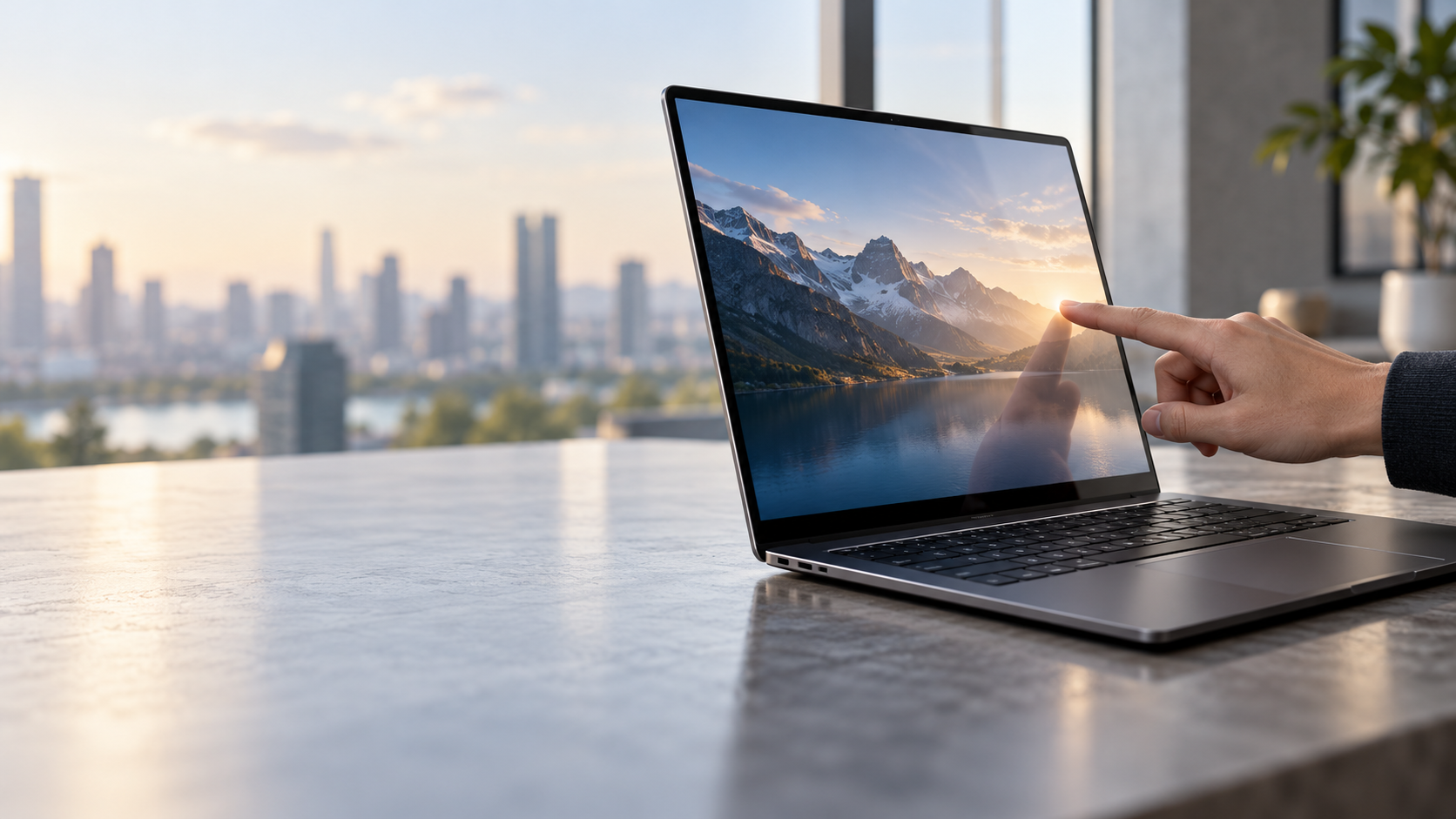
Apple’s reported touchscreen MacBook Pro could become the company’s biggest Mac design change in years—and one of its most expensive. Reports cited by Yahoo Finance, Engadget, NewsCord, and 36Kr describe a laptop with an OLED touchscreen, professional-grade positioning, an approximate three-pound weight, and a reported starting price of US$2,899.
That price would place the device well above mainstream laptops and firmly in the enthusiast and professional category. It would also challenge Apple’s long-standing separation between the Mac and iPad product lines.
The reports remain incomplete. They do not confirm the processor, memory, storage, screen size, resolution, refresh rate, battery life, ports, camera, release date, or complete configuration list. The central question is therefore straightforward: Does a touchscreen MacBook Pro justify its extreme price, or does Apple’s premium go too far?
What Apple Is Reportedly Planning
A touchscreen MacBook Pro starting at $2,899
Yahoo Finance’s source summary describes a $2,899 MacBook Pro and identifies it as Apple’s first touchscreen laptop Source 3. NewsCord reports the same starting price and refers to a PROLED XDR display Source 7.
“Starting price” normally refers to an entry-level configuration. Additional memory, storage, or other upgrades could increase the final cost significantly. Because the reports do not include a complete configuration breakdown, the $2,899 figure should be treated as reported rather than fully verified global retail pricing.
Apple’s reported first touchscreen laptop
A touchscreen MacBook Pro would represent a major change to Apple’s established laptop design. MacBooks have traditionally relied on a keyboard, trackpad, and mouse, while iPads use touch as their primary interaction method.
Combining those approaches could make the Mac more versatile, but it would also create greater overlap with the iPad Pro. Buyers could compare the two product lines by software, performance, weight, display quality, accessories, and interaction style.
OLED display and professional positioning
Engadget reports that the redesigned MacBook Pro includes an OLED touchscreen and weighs approximately three pounds Source 5. NewsCord separately uses the term “PROLED XDR,” although the supplied summary does not define the technology in detail Source 7.
OLED could deliver deeper blacks, stronger contrast, richer colors, improved HDR, and faster pixel response. Those benefits would appeal to photographers, video editors, designers, and other users who place a high value on display quality.
The reports do not confirm resolution, brightness, refresh rate, durability, or battery impact. Those specifications will determine whether the display offers meaningful professional value or simply increases the price.
Why the Price Is So High
The reported $2,899 starting price may reflect several expensive design goals:
- An integrated touchscreen layer.
- An OLED display.
- MacBook Pro-level performance.
- A redesigned chassis.
- A portable professional form factor.
- Premium materials and construction.
- An approximate three-pound weight.
Adding touch input can increase engineering complexity. The display must support touch detection without compromising brightness, image quality, durability, hinge stability, or battery life. OLED panels may also cost more than conventional LCD panels.
Weight creates another challenge. A lightweight professional laptop must protect its display and internal components, manage heat, support the hinge, and withstand frequent travel. If Apple achieves that balance without sacrificing battery life, thermal performance, or durability, the weight could strengthen the premium argument.
A 36Kr report gives a top-spec price of 112,600 yuan Source 9. Regional pricing reflects taxes, distribution costs, currency conditions, import policies, and market positioning, so the figure should not be treated as a direct global conversion. It does, however, suggest that higher memory and storage configurations could cost substantially more than the entry model.
Is Touch Useful on a MacBook?
Touch input could help with drawing, photo adjustments, timeline navigation, media controls, document annotation, presentations, and direct manipulation of design elements. The most practical approach would probably combine touch with the keyboard and trackpad rather than replace either one.
A creator might use touch to move an object or scrub through a timeline, then return to the trackpad for precision work and the keyboard for shortcuts. That benefit depends heavily on software. macOS applications would need touch-friendly interfaces without losing the density and precision expected from desktop software.
Touch could also speed up everyday tasks such as:
- Scrolling through documents.
- Repositioning windows.
- Marking up PDFs.
- Controlling media playback.
- Navigating presentations.
- Signing documents.
- Selecting objects in compatible creative applications.
However, occasional convenience may not justify a major price increase. Extended touchscreen use can cause arm fatigue, and reaching toward a vertical display may be less comfortable than using a trackpad. A trackpad may remain better for detailed text selection, fine cursor control, long editing sessions, and complex multitasking.
The feature must improve core workflows rather than serve as an expensive alternative to existing gestures.
The Mac and iPad Product Divide
Apple has historically positioned the Mac and iPad around different strengths. The Mac emphasizes desktop applications, multitasking, a physical keyboard, and pointer-based control. The iPad emphasizes touch, portability, and direct interaction.
A touchscreen MacBook Pro could weaken that distinction. It might attract customers who want one device instead of a MacBook and an iPad, while reducing one of the iPad Pro’s clearest advantages.
Apple may need to make macOS menus, controls, window management, and professional applications more touch-friendly while preserving the precision expected by Mac users. The available sources do not include specific statements from Apple executives about this strategy, so these implications remain analysis rather than confirmed corporate intent.
The 36Kr report also considers what Steve Jobs might have thought about the product Source 9. That is commentary, not a verifiable statement about Jobs’s position on this specific device.
What the Price Means for Apple
A $2,899 starting price would position the touchscreen MacBook Pro as a flagship rather than a mass-market laptop. Apple could use it to test demand for touchscreen Macs, establish a new premium tier, and increase its average selling price while continuing to sell conventional MacBook models.
If demand is strong, touchscreen features could spread to other models. If demand is weak, Apple could keep the product as a specialized premium option.
Success could also encourage competitors to offer more expensive laptops with OLED panels, touch input, and hybrid interaction systems. Failure could signal that customers view touchscreens as unnecessary on traditional laptops.
Customers paying nearly $3,000 will expect:
- Excellent build quality.
- Long software support.
- Strong battery life.
- Reliable touchscreen performance.
- Professional-grade display quality.
- Meaningful performance gains.
- Stable software integration.
- Reasonable durability and repair options.
Poor touch support, awkward ergonomics, limited application compatibility, or high repair costs would make the price difficult to defend.
Who Should Consider It?
The touchscreen MacBook Pro may suit professional creators who use touch input daily, users who need a high-quality display and portable chassis, Apple customers seeking the newest hardware design, and professionals who prefer macOS but want touchscreen capability.
The strongest candidates will be able to identify specific daily tasks that touch improves. A video editor who frequently scrubs timelines or a designer who manipulates visual elements directly may gain more value than a general office user.
The laptop may be unnecessary for students with standard productivity needs, users who browse and stream, customers who already own an iPad with keyboard support, value-focused buyers, and people satisfied with an existing MacBook Pro. A conventional MacBook Pro may provide comparable performance, while an iPad may offer a more natural touch-first experience.
Before buying, consider:
- Will touch improve daily tasks or only occasional actions?
- Is the reported OLED display necessary for the intended work?
- Would an existing MacBook Pro meet performance requirements?
- Would an iPad Pro better suit a touch-first workflow?
- Does the entry configuration include enough memory and storage?
- Are the final specifications and availability confirmed?
- Can the buyer afford accessories, protection, and potential repairs?
- Is the reported weight accurate for the preferred screen size?
The Biggest Unknowns
The supplied reports do not confirm:
- Processor generation.
- Memory options.
- Storage capacity.
- Screen size and resolution.
- Refresh rate and brightness.
- Battery capacity or runtime.
- Port selection.
- Webcam specifications.
- Touchscreen durability.
- Repairability.
- Release date and international availability.
These omissions make a complete value judgment impossible. A $2,899 laptop with generous memory, storage, and display hardware would offer a different proposition from a base model that requires expensive upgrades.
Before purchase, buyers should verify the official launch date, final configurations, warranty terms, repair options, accessory compatibility, and independent battery and performance testing.
Verdict: Innovation With a Luxury-Level Price
The reported $2,899 starting price would make the touchscreen MacBook Pro one of Apple’s most expensive mainstream laptops. Its potential value comes from the combination of an OLED touchscreen, professional performance, an approximate three-pound weight, and a new interaction model.
The risks are substantial. Touch input may be uncomfortable for extended use, software support may be incomplete, the device could overlap with the iPad Pro, and higher configurations could become dramatically more expensive. The current reports also leave too many specifications unknown.
The touchscreen MacBook Pro will succeed if touch becomes an essential professional tool rather than an expensive novelty. Buyers should wait for complete specifications, confirmed availability, independent testing, battery results, and software compatibility before deciding whether the price is justified.
FAQ
How much does the touchscreen MacBook Pro reportedly cost?
The reported starting price is US$2,899. Higher-end configurations may cost more, and the available summaries do not provide a complete configuration list Source 3.
Is this Apple’s first touchscreen MacBook?
The supplied summaries describe it as Apple’s first touchscreen laptop. They do not provide a complete history of prototypes or unreleased devices.
Does it use an OLED display?
Engadget reports an OLED touchscreen Source 5, while NewsCord refers to a PROLED XDR display Source 7. Complete display specifications remain unconfirmed.
How much does it weigh?
Engadget reports an approximate weight of three pounds Source 5. The exact weight may vary by configuration or screen size.
Why is the reported price so high?
The premium may reflect the combination of a touchscreen, OLED display, MacBook Pro positioning, redesigned hardware, and a lightweight chassis. The sources do not provide a confirmed cost breakdown.
Should buyers choose it over an iPad Pro or standard MacBook Pro?
The choice depends on workflow. Users who need macOS, a keyboard, professional performance, and touch input may prefer the touchscreen MacBook Pro. Touch-first users may prefer an iPad Pro, while value-focused buyers may find a conventional MacBook Pro more practical.
Artikel Terkait
-
 Google Xreal Glasses Reported at $1,099: What to Know
-
 Apple’s Foldable iPhone Hinge Faces Durability Questions
-
 PS Plus Free Games for November 2026: Current Status
-
 Apple Reportedly Unveils a Touch-Screen MacBook Pro
-
 Reddit's For You Feed and the Future of Discovery
-
 Sony Prism PS5 Controllers: 2027 Release and Details